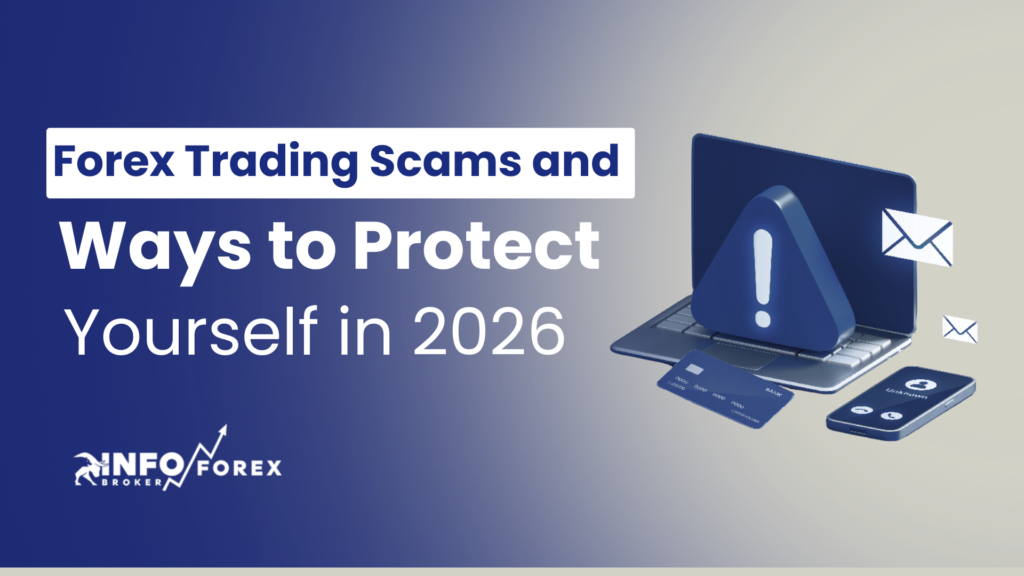
Forex scams have become a prevalent topic in recent times. If you are a novice trader, it is easy to fall victim to forex scammers operating within this sector.
The foreign exchange market is vast, with daily trading volumes exceeding $9.6 trillion. However, it lacks stringent regulation, creating opportunities for forex scammers. Inexperienced traders often find themselves lured by enticing promises of rapid profits such as “10X your capital in 10 days,” “the secret trading strategy,” or “simplify complicated market situations with our intelligent trading robot,” among others.
Before you venture into the Forex market, it is essential to acquire a solid trading education, maintain a funded account, and grasp effective money management strategies. This is important because numerous dishonest people seek to defraud you through forex trading. Forex scammers are perpetually lurking, attempting to siphon off your funds. Therefore, it is imperative to be informed about their tactics and dubious practices.
We aim to enlighten you about the ten primary forex scams and the methods to safeguard yourself against foreign exchange fraud as a trader. We trust that this trustworthy information will enhance the safety, security, and smoothness of your forex trading experience.
Signal-Seller Scams: Why Most Forex Signals Fail
Signal sellers can be individual traders, retail farms, or managed account firms. They primarily focus on novice forex traders who are consistently incurring losses due to lack of discipline in their trading practices.
Scammers posing as signal sellers entice unsuccessful forex traders with the attraction of exceptionally high forex returns with minimal financial risk, along with a reasonable fee for their expert predictions. The presence of fabricated testimonials from individuals endorsing their excellent trading skills makes the signal seller appear highly appealing to novice traders keen to try it out.
Signal sellers disseminate trade suggestions that typically encompass a currency pair, the direction of the trade, entry price, stop loss, and target levels. They impose charges on their clients for the information they share, which can be on a daily, weekly, or monthly basis. Many simply gather funds from a specific number of traders and vanish. Some continue to offer signal services to keep their registered traders engaged. However, the majority of their predictions do not contribute to successful trades. Occasionally, brokers reference these sources to persuade you regarding a trade.
The primary strategy for steering clear of signal-seller scams is to use caution and remain well-informed. I have presented several facts that can assist you in avoiding such forex scams.
Examine the Trading Records of Signal Sellers
It is essential to thoroughly evaluate the claims made by the signal seller alongside their trading history. Given their mixed performance, which includes both successful and unsuccessful trades, reaching a definitive conclusion can be challenging.
Test the Signals Using a Demo Account
The most effective method to assess whether a signal seller will be advantageous for you is to create a demo trading account. Engage in practice trades that do not involve real capital, utilizing the paid signals provided. This will allow you to ascertain if the predictive signals are effective for your trading strategy. This approach is the most effective way to identify reputable signal sellers.
Have Faith in Your Instincts
Ultimately, you will develop a sense regarding the signal sellers. The industry is rife with dishonest individuals. Therefore, it is prudent to assume that all may be untrustworthy until you obtain sufficient evidence to support your trust.
These strategies can assist you in evaluating quality signal sellers on a larger scale. I hope you can protect yourself against such forex scams.
Forex Robot Scam & Fraud
Naturally, people seek solutions that facilitate their trading experience, making it more effortless and automated by simplifying intricate market situations. This is the reason why forex robot scams and deceptive actions arise periodically.
The current trend in the forex trading arena involves the utilization of automated algorithms or computer programs as technical indicators for entering and exiting trades.
Forex robot con artists entice novice traders with the attraction of substantial forex profits with minimal effort. Compelling brochures showcasing robots and deceptive or misleading statistics attract traders who prefer convenience.
They purchase a promoted product, believing they can generate wealth effortlessly without the need to access their trading account. However, in reality, a robot cannot adjust and succeed in all circumstances and complicated markets. It is primarily used to evaluate historical performance and detect trends. Unfortunately, they often realize their error too late, once their funds have been depleted.
If you are contemplating the use of a forex robot, it is essential to take certain precautions that we outline below:
Testing the System Parameters and Optimization Code
Testing the parameters and optimization codes of the forex trading system is essential. If these parameters and codes are not valid, the system or robot may produce arbitrary buy and sell signals, possibly jeopardizing your investment. While there are tested systems available in the market, it is advisable to carry out thorough research prior to making a purchase.
Check the Reviews from the Third Party
Not every forex robot is a scam. However, a legitimate one must undergo official and independent evaluation and testing by a trustworthy source. This is important because enticing testimonials or reviews that persuade you may be sponsored.
Online Research
You can conduct an online search for a list of forex robot scams. This may assist you in avoiding clear of certain notorious scammers. It is essential to read user reviews and their negative feedback.
Trust in Your Intuition
Naturally, it is essential to trust your intuition. Consider the possibility that all robot sellers are motivated by greed. Reflect on this: if their product truly performed as they asserted, as demonstrated in a persuasive manner, they would not be offering it for sale to you. Instead, they would utilize it solely for their own benefit.
It is essential to take into account various additional factors in order to reach a solid decision and protect yourself from significant forex scams and fraud. By evaluating the marketing communications from sellers, the percentage increase in returns, the strategies used, and the use of robots from ‘unregulated brokers’ that generate exceptionally advantageous outcomes, you can distinguish yourself from the typical victims of fraudulent robot purchases.
Forex Investment Scams
A polished marketing message or a persuasive salesperson can entice you into participating in these forex scams.
You relinquish control over your hard-earned funds and entrust them to a so-called highly skilled forex trader, who assures you of exceptional market returns in exchange for a portion of the profits.
Such Scenarios are Prevalent in this Context.
Once you transfer your capital to investment firms or individuals, you frequently find yourself with nothing. The company or the so-called skilled trader claims they have no record of you and have not received any funds from you. You are left with no recourse.
You might receive a return from the profits generated by your investment over a specific period. This is because the scammers require an ongoing influx of new investors to keep up their operations. Once they reach their target, the owners typically shut it down and abscond with all the remaining funds.
Another possibility is that they create an account for you, often with an unregulated and dubious broker. They deliberately deplete your account while blaming the loss to the complex and unstable market, but in reality, the funds have been redirected to their own brokerage. Since the broker is unregulated, recovering your money becomes exceedingly difficult.
Measures you can take in this case to avoid Forex scams are
How to Engage Individuals in Conversation
It is essential to converse with those who are already participating in the investment program. In certain instances, the individuals featured in promotional videos or brochures may be compensated. It is advisable to confirm whether they have actually profited.
Historical Results
It is important to examine their historical performance and track record prior to making a major decision. Checking their iForexMedia profile is an effective strategy to safeguard yourself against possible forex scams.
Examine the Trader’s LinkedIn Profile
Investigate the individuals behind the company or the specific trader on LinkedIn. Review their professional profiles, assess their trading expertise, and consider the recommendations or criticisms directed at them. Strong endorsements will enhance your sense of security.
Investing can be rewarding if the company you choose has an impeccable track record and reputation. Avoid taking anyone’s claims at face value. Carry out thorough research to ensure that your investment remains both legitimate and transparent.
Fake Forex Experts and Account Manager Scam
Three possible market movements can perplex novice traders. They often find themselves uncertain about what actions to take and how to execute them.
Additionally, some people lack sufficient time to acquire the necessary trading skills and to carry out trades. Certain so-called forex account managers exploit this situation, taking advantage of them as one would a child.
Essentially, a managed forex account enables a professional manager to trade your funds on your behalf, in exchange for a salary or a predetermined percentage of the profits generated.
Entrusting a professional trader with your account can be a wise and profitable choice. They will oversee your account, and it becomes their responsibility to ensure its profitability. This is certainly achievable if you place your account in competent hands. Conversely, if you assign control to an incompetent manager, your decision may lead to ruinous effects.
In the United States, account managers and their firms must be registered with the CFTC or the National Futures Association (NFA).
In South Africa, a prospective account manager is required to possess a CAT 2 FSB license.
It is necessary to remain vigilant, as many deceitful People seek to exploit your financial/monetary ambitions; therefore, it is essential to learn how to identify and avoid such individuals.
Here are a couple of tips for you:
Verify the Background
If you wish to have your Forex account overseen by a professional trader, it is important to ensure that they possess strong technical and fundamental knowledge, along with the required skills and experience in the Forex sector. To prevent falling victim to a scam, you should take into account the total number of accounts they manage, their management fees, the shape of their equity curve, years of experience, and their long-term performance, among other factors.
Average Return Per Month Calculator
Assess the return on investment and money management strategies, particularly the anticipated monthly profit of your manager. It is vital to confirm that your manager does not hedge two separate accounts against one another. Refrain from being misled by the pop-up message “Double up your account.” If the monthly projected profit of your selected manager ranges from 0.5% to 4.5%, they may be trustworthy.
Drawdown
In simple terms, “Drawdown” refers to the decrease in one’s trading capital measured from its highest point to its lowest. For instance, if you operate a $3K account and incur a loss of $1K consecutively before beginning to recover, your maximum drawdown would be 50%. Ideally, drawdown should not surpass 15%. Steer clear of account managers whose maximum drawdown exceeds 20%.
Reference
If you have a personal connection with the manager or were referred by family members or friends, it is less likely that they are a scammer.
Additionally, the account must be registered in your name, and the account manager should only have trading access without the ability to make withdrawals. As the account owner, you should always maintain the power to deny access to your Forex account manager.
You may contact to your local financial services board to learn about the requirements for fund managers that must be adhered to for conducting currency trading. Subsequently, ensure that your selected individual complies in accordance with these regulations.
Bid/Ask Spread Manipulation: A Hidden Forex Broker Scam
The term ‘bid’ denotes the price at which one can purchase an asset, whereas ‘ask’ signifies the price at which one can sell it. The disparity between the bid and ask prices is referred to as the spread.
For instance, if the EUR/USD exchange rate is set at 1.1400, the broker may present a buying price of 1.1401 and a selling price of 1.1399. In this scenario, the spread is 2 pips, which serves as the broker’s compensation for facilitating each transaction.
The point spread scam represents a specific type of forex fraud that entails the manipulation of the bid-ask spread through computerized means. Generally, these spreads fluctuate among different currency pairs, which contributes to the challenges forex traders encounter in achieving profitability.
Exercise caution when observing considerable discrepancies in point spreads among various brokers. A spread of 7-8 pips, as opposed to the typical 2-3 pips, serves as a warning sign that a point spread scam may be taking place on your trading platform or broker. Such scams complicate the ability to earn profits from trading activities.
Here are some measures for you to protect yourself from this kind of Forex scam:
What is a Spread in Trading: The spread represents the profit margin of your broker, which is applied to every executed trade or transaction. Numerous unethical brokers partake in this practice to increase their profits. Therefore, it is essential to be aware of your spread.
Trading Style: For those who engage in intraday trading or scalping, executing numerous short-term trades, a high spread can greatly diminish your profits. Conversely, for long-term traders (swing traders) who generate a specific number of pips in profit per trade, the spread is not a major issue.
Choose a Quality Broker: A reputable broker typically offers a low spread, reduced operating costs, and extended savings. Thus, it is imperative to trade with a quality broker.
The Rise of Forex Pyramid Schemes in 2026
Ponzi or pyramid schemes are fraudulent investment practices in which scammers promise returns that exceed the average, yet ultimately do not sustain those promises over time. This type of fraud is frequently categorized as affinity fraud.
In the context of a forex pyramid scheme, initial investors often receive the promised returns on their modest initial investments, which encourages them to recruit friends and family into the scheme.
The reality is that such forex scams provide returns to early investors by drawing in new participants.
In essence, scammers utilize the funds from new investors to reimburse earlier backers. When the number of investors begins to decline, the influx of new investments ceases, prompting the scammers to shut down the scheme and abscond with the funds. To protect yourself from this type of forex scam, be aware of the following characteristics:
- Promises of substantial returns with minimal or no risk.
- Activities that are not registered with the Securities and Exchange Commission.
- Assurances of a steady stream of returns, irrespective of complex market conditions.
- Investment strategies that are either secretive or excessively complicated to clarify.
- Legal documentation that is not available for investors to review.
- Challenges in recovering invested funds.
Forex Boiler Room Scams and Cold Calling Fraud
In this particular form of forex scam, fraudsters typically trick individuals into purchasing stocks or making investments. They rely on generating a feeling of “urgency” to persuade you into believing that this is a unique opportunity or a once-in-a-lifetime chance.
They will attempt to convince you to seize quick returns. Many individuals fall victim to these forex scams due to a lack of time to thoroughly consider their options.
Ways to Avoid Boiler Room Scams:
Call or email: If you receive any unsolicited sales calls or emails from unknown sources, exercise caution. You may observe that they attempt to sell you worthless stocks. Thus, it is necessary to remain vigilant.
Pressure to act now: They exert pressure on you to accept their offer immediately. This tactic prevents the target from adequately researching the opportunity. You may be instructed to keep your communications confidential.
Provide the proper information: If a boiler room operation is exposed, it may face state or federal action. Consequently, you may notice their hesitance when questioned about their sales practices or the investments they are promoting.
High return promises: If the caller is unable to clearly articulate how these returns will be generated, it operates as a warning sign and a strong indication that you are being targeted by forex scams. Promises of discounts or gifts also serve as bait to ensnare you.
You can view this video for additional information:
Therefore, prior to investing your hard-earned money, take the necessary time to evaluate the proposal, maintain a skeptical mindset, carry out thorough research on the investment, and report any instances of forex fraud if needed.
Forex Broker Scams: Hidden Risks Behind Attractive Offers
Due to the absence of a singular central regulatory authority in the forex market, certain brokers may engage in dishonest practices against their clients.
Unethical forex brokers often manipulate the prices of currency pairs to activate significant volumes of stop-loss trades.
They take advantage of these artificially altered price movements. Practices such as bid/ask spread manipulation, misleading signals, excessive trading (churning), deposit bonuses or double-bonus scams, among others, highlight the unethical behavior of fraudulent forex brokers. This is a prominent reason why individuals incur losses in the forex market.
To Safeguard Yourself:
Confirm the broker’s physical address: It is necessary to verify the contact details, company information, the establishment duration of the broker, as well as the physical address, email, and phone number provided by the brokers.
Regulation: It is advisable to examine the broker’s website for regulatory information. If such information is lacking or unclear, it is best to disregard that broker. Ensure that the brokerage is regulated, as trading with an unregulated forex broker can jeopardize your investment.
Demo account: Reputable forex brokers typically offer a demo trading option for new traders to familiarize themselves with how their platform operates within the forex industry. You can utilize this free, no-cost demo account to practice trading prior to opening a real, funded forex account. The availability of a forex demo account acts as a fundamental check on the broker. The lack of this option should raise a warning sign for you to avoid that broker.
Research the broker: Search for your broker’s name on Google. Review feedback, forum discussions, and user comments, etc. If the findings are unconvincing, it is prudent to avoid that broker. Ensure that your selected broker is not included in the list of blacklisted forex brokers.
Forex Trading Course Scam in 2026
When you search on Google using terms like “forex trading course,” “forex trading pdf,” and similar phrases, you are likely to encounter attractive offers, articles, or reviews. Numerous small businesses or individual forex traders are keen to sell their paid forex trading courses. However, the reality is that many of these offerings are scams and lack genuine value.
These individuals may have experienced failures or struggled to achieve significant profits in the forex market, leading them to find it more lucrative to sell their ineffective courses or PDFs to beginners. Therefore, do not be misled by the types of promotions you come across on social media platforms such as Pinterest, Instagram, and Facebook. Failing to exercise caution may result in financial losses in forex trading.
Certainly, there are some reputable trading courses and paid forex trading educational resources available. However, it is essential to identify these by considering the following guidelines:
Engage with others: Speak to individuals who have taken the courses or used the products. The individuals featured in promotional videos may not be genuine. It is vital to verify their authenticity.
iForexMedia: iForexMedia serves as an online automated tool for forex traders, allowing them to monitor, compare, analyze, and share their trading activities. Review the trainer’s iForexMedia profile and trading history.
Conduct an online survey: Look up the product on search engines, visit evaluation sites, and consumer forums. Understand what others are saying about the course or educational materials. Strong recommendations and reviews may offer reassurance.
Examine social media: Investigate their presence, including reviews and comments from individuals who have benefited from or been disappointed by their offerings. In particular, verify their LinkedIn profile, as it is the leading professional networking site.
WhatsApp & Telegram Investment Groups
Many scammers operate private trading groups where members are shown fabricated profits.
The process usually works like this:
- Join a free group
- See fake success stories.
- Make a small investment.
- Receive fake profits.
- Invest larger amounts.
- Lose access to funds.
Several recent fraud cases involved WhatsApp and Telegram groups promoting fake forex opportunities.
How to Protect Yourself
- Avoid unsolicited investment invitations.
- Never send funds to personal bank accounts.
- Verify company registration independently.
These are the 10 major forex scams you need to be well-informed about. Those financial scams are going on to trap the rookie traders & distort their money.
Is Forex Safe? Comprehending the Risks and Scams
Now that the question “Is forex a scam?” is clear to you, I believe.
Forex is essentially an automated market for currencies. Currencies are exchanged through computer networks among traders, commonly known as over-the-counter (OTC) transactions. When you engage in a forex trade, you simultaneously purchase one currency while selling another. Your profit or loss depends on the timing, location, and method of the trade.
This is why forex itself is not a scam. It is also not a multi-level marketing scheme. Forex is entirely legitimate. In this context, you are merely speculating on the values of currencies, commodities, or index prices. It operates as a valid means to trade currencies and commodities, including gold, crude oil, and silver, for profit.
Nevertheless, the forex market has been exploited by unscrupulous individuals and fraudulent companies attempting to deceive inexperienced traders by appealing to their greed. To avoid forex scams, it is essential to receive proper education from a qualified, experienced mentor.
Penny for Your Thought
Misguided individuals often believe that forex is a fraudulent scheme. The aforementioned mechanisms, or forex scams, are present in the market, devised by cunning individuals and organizations to deceive people for their own avaricious benefits. The deceitful actions of scammers prompt individuals to invest their hard-earned money into these fraudulent plans. This results in a widespread perception that forex trading is merely a scam. An additional factor contributing to the belief that it is a scam is the lack of understanding of how the forex market operates, which often results in traders consistently incurring losses on their trades.
Nevertheless, if you are not adequately informed, you may easily fall prey to forex scammers. There are multiple strategies to prevent becoming a victim of forex scams. You should:
- Steer clear of unregulated, dubious brokers.
- Refrain from engaging with unverified account managers.
- Avoid the so-called “Holy Grail” trading strategy.
- Stay away from unverified advertised forex signals.
- Eschew unverified “Perfect” trading robots or automated tools.
I believe this article addresses the primary forex scams and provides guidance on how to avoid them.