
Market News
Latest Forex News
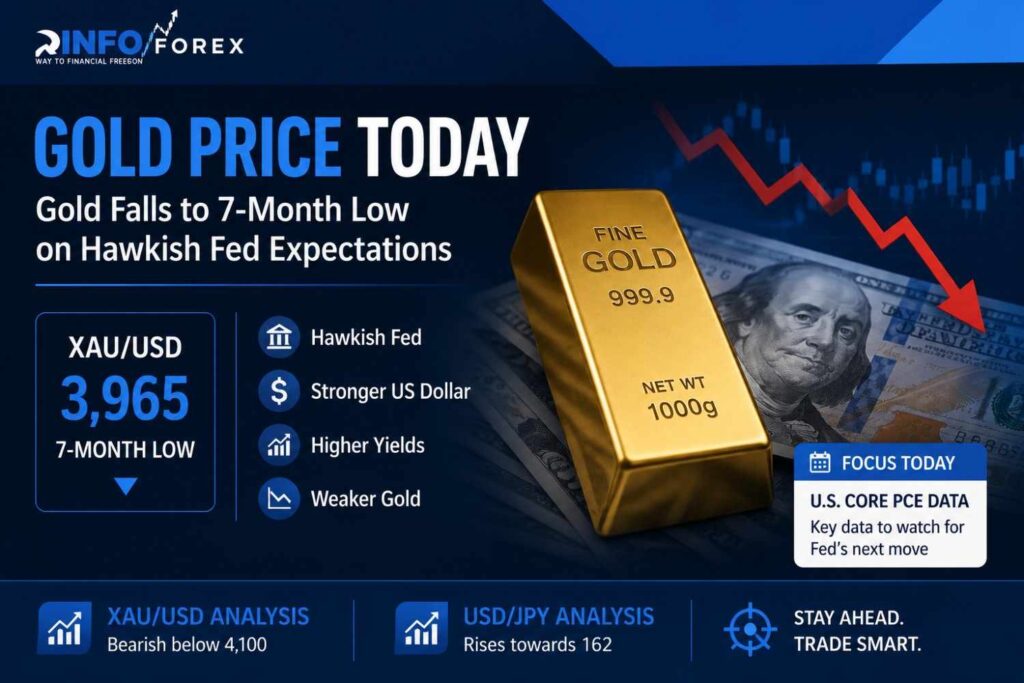
Gold prices (XAU/USD) recovered from their lowest level since November 2025 during Tuesday’s Asian session, moving higher as European trading began. Despite the bounce, the broader outlook remains cautious as a stronger US Dollar continues to weigh on the precious metal.
The US Dollar remains well supported after geopolitical developments in the Middle East and growing expectations that the Federal Reserve could keep interest rates higher for longer. Since gold does not generate interest, rising rate expectations often reduce its appeal compared with yield-bearing assets.
Reports indicated that the United States and Iran were working to reduce tensions after recent military exchanges near the Strait of Hormuz. US President Donald Trump also stated that Iran had requested a meeting in Doha, Qatar. However, Iranian officials denied that any formal technical discussions were scheduled this week. These mixed developments have kept investors alert, supporting demand for the US Dollar while limiting gold’s upside.
Markets also remain focused on inflation risks, which have increased following renewed tensions in the region. Combined with the Federal Reserve’s firm stance on monetary policy, investors continue to expect the possibility of additional rate hikes. Current market pricing suggests there is a strong chance of another rate increase later this year, helping maintain support for the US Dollar and reducing demand for non-yielding assets such as gold.
The Japanese Yen also weakened sharply against the US Dollar, reaching its lowest level in decades, adding further pressure across precious metal markets.
Investors are now watching several important US economic releases, including the Conference Board Consumer Confidence Index and the JOLTS Job Openings report. Later this week, attention will shift to Federal Reserve Chair Kevin Warsh’s speech at the European Central Bank Forum in Sintra, followed by the closely watched US Nonfarm Payrolls (NFP) report. These events could provide fresh direction for both the US Dollar and gold prices.
Technical Analysis
Gold remains under pressure despite Tuesday’s recovery. The price continues to trade below the key $4,000 level, keeping the short-term bearish trend intact. Previous attempts to move above the 100-period Simple Moving Average on the four-hour chart have repeatedly failed, reinforcing resistance in the higher price zone.
The MACD indicator remains slightly below the zero line, suggesting bearish momentum is easing but has not yet turned positive. Meanwhile, the Relative Strength Index (RSI) is hovering near oversold territory, indicating that selling pressure may be slowing, although there is still no confirmed signal of a bullish reversal.
On the upside, immediate resistance is seen around $4,045. A sustained move above this level could allow gold to retest the $4,100 area. However, stronger resistance is expected near the 100-period SMA around $4,180, where sellers may re-enter the market. A decisive break above that level would be needed to improve the overall technical outlook.
Until then, rallies are likely to face selling pressure, while the combination of a firm US Dollar and expectations of higher US interest rates continues to limit gold’s recovery.

Most Recent News

The Forex News for Traders is out. The Dollar is really strong now. It is near its point in the last twelve months. This is important for traders to know because a strong Dollar affects every major currency.
The Dollar is strong because people think the Federal Reserve might raise interest rates again. Before people thought the Fed would start making it easier to borrow money. But inflation is still a problem so people are changing their minds.
This means people want to buy the Dollar, which makes it even stronger. The Dollar Index is close to its point this year.
New traders should pay attention to this. It shows how important it is to think about what central banks might do in the future. Currency prices are not just about what’s happening today. They are also about what traders think will happen tomorrow.
The euro is not doing well. The European Central Bank is okay with how inflation’s going so they do not think they need to raise interest rates. This makes the Dollar look even better.
The Japanese yen is still struggling. The Japanese government is trying to help it. It is not working. The USD/JPY is at a point where the Japanese government might step in which could make the market really volatile.
Everyone is waiting for the U.S. PCE inflation report. This report is important to the Federal Reserve. If it is higher than expected it could mean another interest rate hike, which would make the Dollar even stronger. If it is lower it could mean the Dollar will not do well.
When it comes to trading do not just look at the headlines. Look at how the market reacts to the news. Sometimes the news is good. The currency still goes down because people already knew it was coming.
Now the market is really sensitive to inflation and interest rates. There are a lot of reports coming out this week so traders should be ready, for a lot of ups and downs.
The important thing for new traders to know is to follow what is happening in the economy. Understand why central banks are important.. Do not forget how much big news can affect currency prices.
As the week goes on the Dollar will probably do well if the economic reports support the Federal Reserves plans. Traders should be careful and ready to change their plans if they need to.

The US Dollar is doing well because traders are thinking about what the Federal Reserve will do and what is happening in the Middle East.
On Friday people who trade were looking at what the Federal Reserve might do with interest rates. Some people from the Federal Reserve said things that made traders think interest rates will stay high for a while. The US has been doing well with its economy, which’s another reason the US Dollar is strong. This is making it hard for other currencies like the Euro and the British Pound to get stronger.
The US Dollar Index is near its point this week. Traders are waiting to see what happens with the economy so they can figure out what the Federal Reserve will do next.
There is also a lot of tension in the Middle East, which is making traders nervous. Some people are investing in things because they are worried. The US Dollar is one of those things but traders are being careful because they do not know what will happen next.
The Japanese Yen is not doing well because interest rates are higher in the US than in Japan. This makes the US Dollar stronger than the Yen.
If you look at charts of the US Dollar it is in a position. People who buy the US Dollar are still in control. It seems like they might be getting a little tired after the US Dollar went up so much.
Traders are waiting to see what happens with inflation and jobs, in the US. This information will help them guess what the Federal Reserve will do next. If something unexpected happens it could make the currency market very volatile.
For now traders are watching things, including what the Federal Reserve might do how the economy is doing and what is happening in the Middle East. They are waiting to see what will happen next and what will make the currency market move.

West Texas Intermediate (WTI), the US benchmark for crude oil, is trading slightly higher during Friday’s Asian session, holding above the $75.50 level. The commodity remains supported by geopolitical developments but continues to struggle for stronger upside momentum after recovering from this week’s low near $72.80, its weakest level since early March.
Market sentiment remains cautious after US Vice President JD Vance canceled his scheduled visit to Switzerland for discussions with Iran, raising questions about the progress of diplomatic efforts in the region. At the same time, renewed Israeli air strikes in Lebanon have increased concerns over regional stability, providing additional support to crude prices.
However, gains remain limited as shipping activity through the Strait of Hormuz has resumed, allowing previously delayed oil supplies from the Middle East Gulf to reach global markets and easing some concerns about supply disruptions.
From a technical standpoint, crude oil remains under pressure following this week’s move below the $83.00 area, which had served as the lower boundary of a trading range that had been in place for nearly three months. Momentum indicators continue to favor sellers, with the Relative Strength Index (RSI) hovering near oversold levels and the Moving Average Convergence Divergence (MACD) remaining in negative territory.
Despite the broader bearish outlook, WTI continues to find support above its 200-day Simple Moving Average (SMA), currently located around $72.80. This level remains a key area to watch. A decisive break below it could expose the market to deeper losses, while continued support may encourage buyers to step in on dips.
For now, traders are likely to wait for a stronger directional signal before committing to fresh positions. A sustained recovery would require improving momentum indicators and a clear shift in market sentiment, while further downside would depend on a confirmed break below long-term support.

Gold prices (XAU/USD) posted modest gains on Thursday but remained near weekly lows around the $4,220 level. The precious metal initially benefited from optimism surrounding potential peace negotiations involving Iran; however, those gains were quickly erased after the Federal Reserve delivered a more hawkish-than-expected message, reinforcing expectations of additional interest rate hikes later this year.
As anticipated, the Federal Reserve kept its benchmark interest rate unchanged. However, newly appointed Chairman Kevin Warsh reiterated the central bank’s commitment to bringing inflation back to its 2% target. The Fed’s statement highlighted stronger economic activity and continued resilience in the labor market, while updated projections showed that nine out of nineteen policymakers expect at least one rate hike in 2026.
Following the announcement, market participants increased their expectations for a potential rate increase as early as October. This shift has supported both US Treasury yields and the US Dollar, limiting demand for non-yielding assets such as gold.
Technical Analysis: Gold Remains Under Pressure Below Key Resistance
XAU/USD is currently trading near $4,269 and continues to maintain a broader bearish outlook while remaining below a significant resistance zone. Although momentum indicators on the daily chart are showing signs of stabilization, they have yet to confirm a bullish reversal.
The Relative Strength Index (RSI) remains slightly above the 40 mark, indicating weak buying momentum, while the Moving Average Convergence Divergence (MACD) stays in negative territory. Together, these indicators suggest that bearish pressure has eased but remains dominant.
On the upside, sellers continue to defend the former support area around $4,370, which now acts as immediate resistance. Additional barriers are located near the descending trendline resistance from early March highs above $4,400 and the 200-day Simple Moving Average (SMA) at $4,464.
On the downside, Wednesday’s low near $4,220 serves as the first support level. A break below this area could expose the June 11 low around $4,023. Further weakness may open the door toward the late-October 2025 low near $3,886, which stands as the next major bearish target.

Today’s trading session in the forex market is considered very important because several high-impact economic events could influence market direction. Traders and investors are mainly focused on policy announcements from the United States Federal Reserve. Today, the Federal Funds Rate Decision, FOMC Statement, and Economic Projections are scheduled for release, which could create strong volatility in USD pairs.
If the Federal Reserve continues to maintain an aggressive or hawkish stance on inflation, the US Dollar could strengthen further. On the other hand, if policymakers signal future rate cuts or appear cautious about economic growth, the Dollar could come under pressure. Because of this, sharp price movements may be seen in instruments such as EURUSD, GBPUSD, USDJPY, and Gold.
UK Inflation Data Draws Traders’ Attention
The Consumer Price Index (CPI) data released from the United Kingdom has also been an important market update. According to the latest report, UK CPI came in at 2.8%, while market expectations were 3.0%. Lower-than-expected inflation suggests that price pressures are gradually coming under control.
This development could influence future monetary policy decisions by the Bank of England. If inflation continues to cool, expectations for interest rate cuts could increase. As a result, the British Pound may face short-term selling pressure. Sentiment in the GBPUSD pair remains cautious, and market participants are waiting for upcoming economic updates.
Japan Provided a Positive Surprise During the Asian Session
The Asian trading session was also quite active. Japan’s Core Machinery Orders data comfortably exceeded market expectations. This indicator reflects future business investment activity and is generally used to measure the strength of the Japanese economy.
After the better-than-expected result, the Japanese Yen received support. However, Japan’s Trade Balance remains in negative territory, which is still a concern for the economy. Even so, the strong machinery orders data gave investors a positive signal that domestic business activity appears stable.
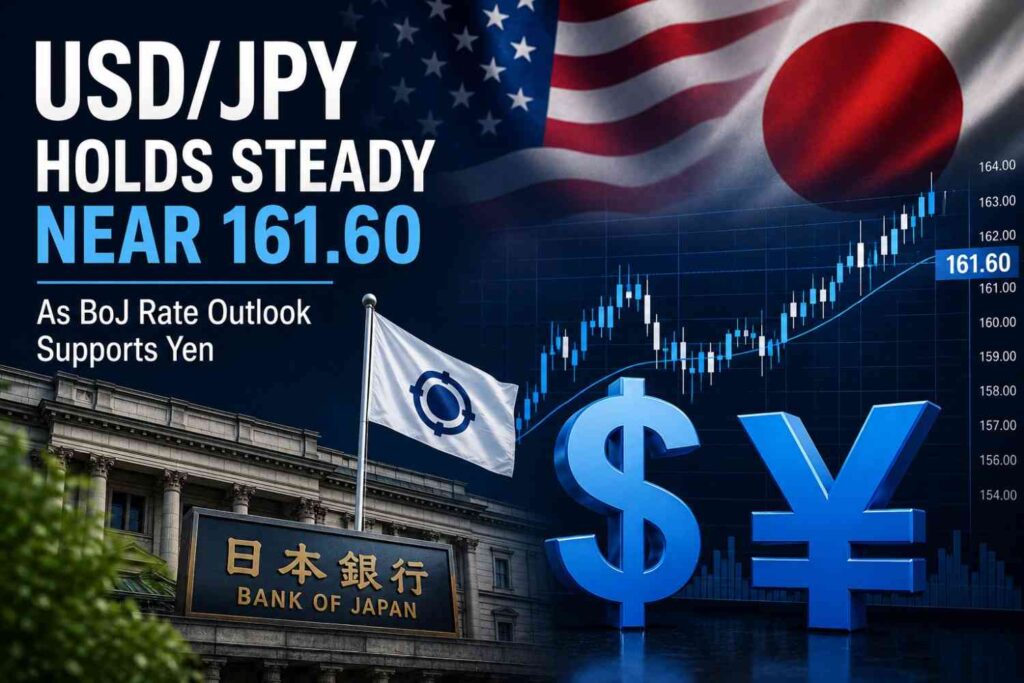
The USDJPY pair is currently trading around elevated levels and traders are closely monitoring whether the Bank of Japan gives any new signal regarding future policy changes or not.
Attention Will Also Remain on the Australian Dollar
For Australian Dollar traders, the speech of Reserve Bank of Australia (RBA) Assistant Governor Jones can remain quite important today. Comments from central bank officials often influence future monetary policy expectations and can rapidly change market sentiment.
If comments supporting inflation concerns or higher interest rates come in the speech, then support can be received by AUD. On the other hand, if there is talk of economic slowdown or a softer policy outlook, then selling pressure on the Australian Dollar can increase.
Currency Strength Analysis: Which Currency Is Strong and Weak?
If we look at the current market movement, the Japanese Yen and Euro are appearing as relatively stronger currencies today. The EURUSD pair is trading in positive territory, which indicates buying interest in the Euro.
The Japanese Yen is also appearing to show strength, especially in some cross pairs. USDJPY is trading above 160, but volatility is remaining in Yen-related pairs.
On the other hand, some weakness is being seen in the British Pound and Australian Dollar. Mild selling pressure was seen in both GBPUSD and AUDUSD pairs, which reflects the cautious approach of traders.
The Swiss Franc is also appearing in demand. Weakness has been seen in USDCHF, which can be a signal of safe-haven demand. Whenever market uncertainty increases, investors often move toward safe-haven assets like the Swiss Franc and Japanese Yen.
Where Are Opportunities Being Made in Cross Currency Pairs?
If we talk about cross currency pairs, then EURAUD, EURCAD and CHFJPY are included among the pairs showing the most strength today. In these pairs, strong currencies are outperforming against weak currencies.
On the other hand, AUDCAD, AUDCHF and CADCHF are appearing relatively under pressure. From this it is known that buyers’ confidence in the Australian Dollar and Canadian Dollar is currently limited.
Upside momentum is also being seen in GBPJPY and CADJPY, which can give an indication of risk sentiment being positive. But traders should remember that after today’s major USD events, market dynamics can change very quickly.
Important Advice for Traders
Today can remain quite volatile for short-term traders and intraday traders. During Federal Reserve announcements, spreads can widen and price movements can be very fast. Therefore, it is necessary to give special attention to proper risk management, stop-loss placement and position sizing.
If you do news trading, then waiting for the market reaction immediately after the announcement can be a better strategy. Many times, after the initial move, the market also reverses, so taking an entry without confirmation can be risky.
Overall, forex market sentiment is currently appearing mixed but opportunity-driven. Traders are seeing buying opportunities in strong currencies like the Euro, Japanese Yen and Swiss Franc, while USD-related announcements can play the biggest role in deciding today’s trading direction.

Forex market today’s session is clearly moving around central bank events and scheduled economic releases. The day is starting with the G7 Meetings, which set the overall global economic sentiment. In the European session, German ZEW Economic Sentiment and Eurozone ZEW Economic Sentiment will be released. German ZEW is expected at -5.8 compared to -10.2, while Eurozone ZEW is expected at -7.2 against -9.1. This data can decide short-term sentiment for EUR pairs.
Market Overview – Today Forex Environment
The market is already in a mixed tone where traders are waiting for central bank communication on one side and macro data on the other side. Today’s flow will mostly be event-driven, so sudden movement in price action is expected.
GBP Session – Bond Market Activity
On the GBP side, a 10-year Bond Auction is scheduled with a yield of 4.98 and a bid-to-cover of 3.6 reported. This bond market data generally impacts GBP sentiment indirectly, especially when risk appetite is changing.
USD Data Session – Important Economic Releases
In the US session, multiple high-impact data releases are scheduled.
ADP Weekly Employment Change is reported at 29.0K, which gives a short-term picture of the labor market. After this, Building Permits are expected at 1.42M and Housing Starts are expected at 1.43M, while the previous reading was 1.47M. This data reflects the strength of the US housing sector.
Import Prices m/m are reported at 0.9% while the previous was 1.9%. This directly indicates inflation pressure and is an important signal for USD pairs.
API Weekly Statistical Bulletin is also scheduled, which is related to oil and energy inventory data and can have an indirect impact on USD sentiment.
NZD Session – Sentiment and Trade Data
On the NZD side, the GDT Price Index is reported at -0.6%, which reflects dairy prices. Westpac Consumer Sentiment is recorded at 94.7, which shows consumer confidence.
Current Account is expected at -1.03B compared to -5.98B, which is an important external balance indicator for NZD.
JPY Session – Key Economic Data
For JPY, Core Machinery Orders are reported at 2.1% while the previous was -9.4%, showing improvement. Trade Balance is -0.21T while the previous was 0.24T.
This data becomes even more important in the context of the BOJ Press Conference because the market is already repricing monetary policy expectations.
AUD Session – Leading Index and Central Bank Focus
For AUD, the MI Leading Index m/m is reported at 0.0%, which gives a neutral growth signal.
RBA Assist Gov Jones Speaks and the RBA Press Conference are scheduled. According to Forex Factory notes, unscripted answers during the Q&A session of the RBA Press Conference create strong volatility, so sudden moves in AUD pairs are expected.
JPY – BOJ Press Conference Focus
The BOJ Press Conference is today’s most important event for JPY traders. The Bank of Japan Governor gives signals about the inflation outlook, economic conditions, and future monetary policy during this event.
According to Forex Factory notes, this press conference is the BOJ’s primary communication method and provides clues about future interest rate decisions. The event remains tentative until it starts, but the market is already moving in anticipation of it.
Market Summary – Overall Structure
Today’s forex market is completely under the influence of central banks and economic data. EUR ZEW data, US ADP employment and housing numbers, NZD sentiment data, JPY machinery orders, and the BOJ Press Conference together will decide market direction.
On the AUD side, the RBA Press Conference and on the USD side, employment and inflation-related data can create major volatility. JPY focus is on the BOJ while EUR focus is on ZEW sentiment.
Overall, the market is news-driven today and price action can show sharp moves according to economic releases.