
Top News
Top News
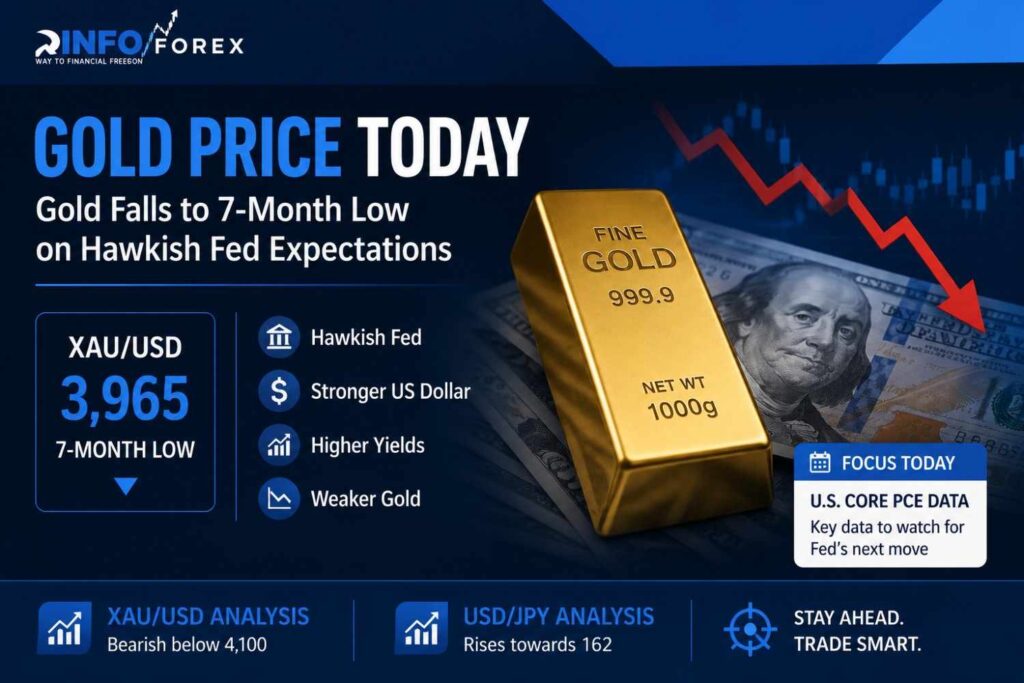
Gold prices (XAU/USD) recovered from their lowest level since November 2025 during Tuesday’s Asian session, moving higher as European trading began. Despite the bounce, the broader outlook remains cautious as a stronger US Dollar continues to weigh on the precious metal.
The US Dollar remains well supported after geopolitical developments in the Middle East and growing expectations that the Federal Reserve could keep interest rates higher for longer. Since gold does not generate interest, rising rate expectations often reduce its appeal compared with yield-bearing assets.
Reports indicated that the United States and Iran were working to reduce tensions after recent military exchanges near the Strait of Hormuz. US President Donald Trump also stated that Iran had requested a meeting in Doha, Qatar. However, Iranian officials denied that any formal technical discussions were scheduled this week. These mixed developments have kept investors alert, supporting demand for the US Dollar while limiting gold’s upside.
Markets also remain focused on inflation risks, which have increased following renewed tensions in the region. Combined with the Federal Reserve’s firm stance on monetary policy, investors continue to expect the possibility of additional rate hikes. Current market pricing suggests there is a strong chance of another rate increase later this year, helping maintain support for the US Dollar and reducing demand for non-yielding assets such as gold.
The Japanese Yen also weakened sharply against the US Dollar, reaching its lowest level in decades, adding further pressure across precious metal markets.
Investors are now watching several important US economic releases, including the Conference Board Consumer Confidence Index and the JOLTS Job Openings report. Later this week, attention will shift to Federal Reserve Chair Kevin Warsh’s speech at the European Central Bank Forum in Sintra, followed by the closely watched US Nonfarm Payrolls (NFP) report. These events could provide fresh direction for both the US Dollar and gold prices.
Technical Analysis
Gold remains under pressure despite Tuesday’s recovery. The price continues to trade below the key $4,000 level, keeping the short-term bearish trend intact. Previous attempts to move above the 100-period Simple Moving Average on the four-hour chart have repeatedly failed, reinforcing resistance in the higher price zone.
The MACD indicator remains slightly below the zero line, suggesting bearish momentum is easing but has not yet turned positive. Meanwhile, the Relative Strength Index (RSI) is hovering near oversold territory, indicating that selling pressure may be slowing, although there is still no confirmed signal of a bullish reversal.
On the upside, immediate resistance is seen around $4,045. A sustained move above this level could allow gold to retest the $4,100 area. However, stronger resistance is expected near the 100-period SMA around $4,180, where sellers may re-enter the market. A decisive break above that level would be needed to improve the overall technical outlook.
Until then, rallies are likely to face selling pressure, while the combination of a firm US Dollar and expectations of higher US interest rates continues to limit gold’s recovery.
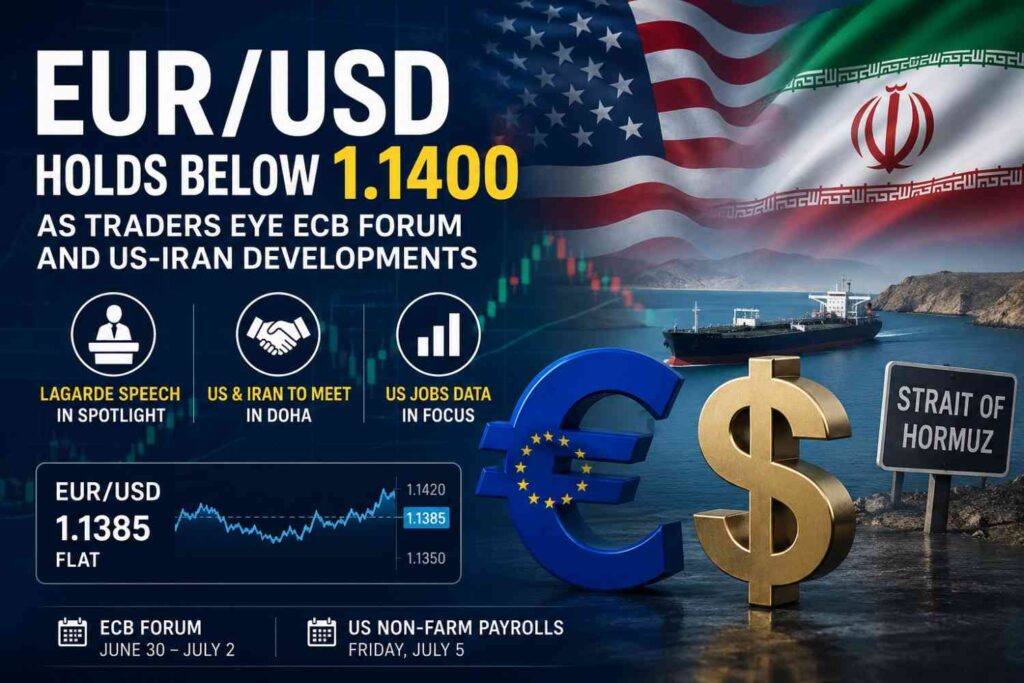
The EUR/USD pair traded steadily near 1.1385 on Monday in Europe as investors were cautious before economic events and news about US-Iran. People are closely watching the European Central Banks forum and the talks between the US and Iran.
The US Dollar stayed strong after people thought the Federal Reserve might not cut interest rates much as expected. Federal Reserve Chair Kevin Warsh sounded hawkish making investors think the US might keep interest rates high which increased demand for the US Dollar.
Tensions in the Middle East are still a focus. Irans Foreign Minister Abbas Araghchi said the Strait of Hormuz is under Irans control. Warned that blocking it could increase tensions.. News that the US and Iran agreed to pause military actions and talk in Doha, Qatar on Tuesday improved market sentiment. This temporary easing of tensions reduced demand for safe-haven assets. Did not eliminate worries about global energy supplies.
Now attention is on European Central Bank President Christine Lagarde, who will speak at the ECBs forum. Investors will analyze her comments for clues about interest rates and inflation in the Eurozone. If she suggests policymakers are cautious about easing policy it might support the euro.
This week traders will also focus on the US June employment report, which will shape expectations for the Federal Reserves policy decision. Strong labor market data might strengthen the US Dollar while weak data might support the EUR/USD pair.
Market Outlook
EUR/USD trades below 1.1400. Easing US-Iran tensions have improved market confidence. The US Dollar stays supported by expectations of Federal Reserve policy. The pair will likely stay range-bound until traders hear from Christine Lagarde and see the US employment data. A move above 1.1400 could lead to resistance levels. A break, below 1.1350 may put the pair under downside pressure.
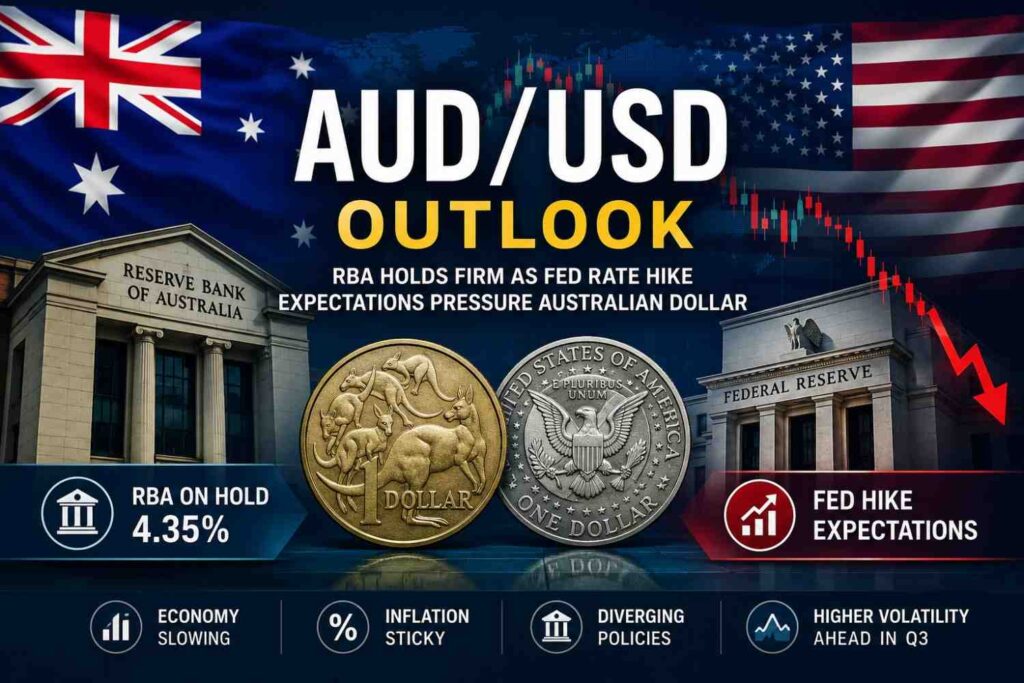
AUD/USD Technical Outlook
The Australian economy is starting to slow down. It was growing well for a while but now things are not looking as good. People are not spending much money and businesses are not doing as well. The unemployment rate is also going up which is a sign.
The main problem for the Reserve Bank of Australia is inflation. It is still too high so they cannot cut interest rates yet. The Reserve Bank of Australia recently decided to keep interest rates the same which means they are being careful and waiting to see what happens with inflation.
The US Federal Reserve is helping the US Dollar by keeping interest rates high. The US economy is doing well with people spending money and jobs available. This means the US Dollar is strong which makes it hard for the Australian Dollar.
If we look at the numbers the Australian Dollar has gone down a lot against the US Dollar. It has fallen than 5% from its highest point. The Australian Dollar is now at a point where it might start to go up but it is not clear what will happen.
In the past the third quarter of the year has been tough for the Australian Dollar. Usually July is a month but August and September can be more volatile. This means we can expect swings in the Australian Dollar.
Big investors are now betting against the Australian Dollar. They think the US Dollar will keep doing which will make the Australian Dollar go down. However it is not all news for the Australian Dollar. If the US Dollar gets too strong and then starts to weaken the Australian Dollar might start to recover.
For now the Australian Dollar is likely to keep going down but not too much. If inflation in Australia starts to go down and the US Dollar stops getting stronger the Australian Dollar might start to do. We just have to wait and see what happens with interest rates and inflation in both Australia and the US.
The Australian Dollar and the US Dollar will probably keep moving down so traders should be ready for big changes. They need to keep an eye on what’s happening with inflation, jobs and what the central banks are doing. This will help them make decisions about what to do with their money.
The Reserve Bank of Australia and the Australian Dollar are closely linked. What the Reserve Bank of Australia does with interest rates will affect the Australian Dollar. The Australian Dollar is also affected by what the US Federal Reserve does with interest rates.
The Australian economy and the Australian Dollar are connected. When the Australian economy is doing well the Australian Dollar tends to do too.. When the Australian economy is struggling the Australian Dollar often goes down.
The US Dollar is strong now which is making it hard for the Australian Dollar.. If the US Dollar starts to weaken the Australian Dollar might start to recover. The Australian Dollar and the US Dollar are always moving up and down so traders need to be ready for anything.
The Australian Dollar will probably keep being volatile which means it will keep moving down. Traders should be ready for changes and keep a close eye on what is happening with inflation, jobs and interest rates in both Australia and the US. The Australian Dollar and the US Dollar will keep being affected by what the Reserve Bank of Australia and the US Federal Reserve do, with interest rates.
Selling pressure continues in the gold market, and XAU/USD is now trading near a 7-month low. The primary reason is the hawkish stance of the U.S. Federal Reserve, which has provided strong support to both the U.S. Dollar and U.S. Treasury yields.
Traders are now fully focused on the upcoming U.S. Core PCE Inflation Data, which is considered the Federal Reserve’s preferred inflation indicator. If inflation comes in higher than expected, the chances of further Fed interest rate hikes could increase. In that scenario, the U.S. Dollar may strengthen further, while gold could face additional selling pressure.
Gold Analysis (XAU/USD)
Gold has fallen below the triangle pattern and the 200-day Moving Average, which are strong signals that the price of gold is going down. The 50-day Simple Moving Average is also close to crossing below the 200-day Simple Moving Average this is called a Death Cross. This usually means the price of gold will keep going down for a while.
If people keep selling gold the price of gold could go down to around 3930. Then it could go down even more to 3800 which is a big number that people pay attention to.
If the Core PCE data is not as good as people thought it would be the price of gold could go up a little bit. For the price of gold to really go up it would need to stay above 4100.
USD/JPY Analysis
The USD/JPY is trading at a high level it has not been this high in almost 40 years. The US Dollar is strong and the interest rates in the US are much higher than in Japan. This helps the USD/JPY.
Even though the Bank of Japan raised the interest rates they are still much lower than, in the US. So the Japanese Yen is still weak. Traders like to buy the US Dollar and sell the Japanese Yen. If today’s U.S. Core PCE data comes in strong, USD/JPY could break above 162 and move toward even higher levels. However, at such elevated levels, the risk of intervention by Japanese authorities also remains high.
What Strategy Could Forex Traders Consider?
Gold Traders: Avoid taking aggressive positions before the Core PCE release, as high volatility is expected.
Dollar Traders: Strong inflation data could provide additional support for the U.S. Dollar.
USD/JPY Traders: The trend remains bullish, but intervention-related headlines could trigger sharp pullbacks at any time.
Risk Management: Always use stop-loss orders and proper position sizing during high-impact news events.
Bottom Line
Today’s U.S. Core PCE Inflation Report is the most important event of the week for both the forex and commodities markets. If inflation exceeds expectations, gold could face further weakness while dollar pairs may attract fresh buying interest. If the data comes in softer than expected, gold may receive temporary relief, and the U.S. Dollar could see some profit-taking.
Today’s key trading focus: U.S. Core PCE Data and Fed rate expectations.
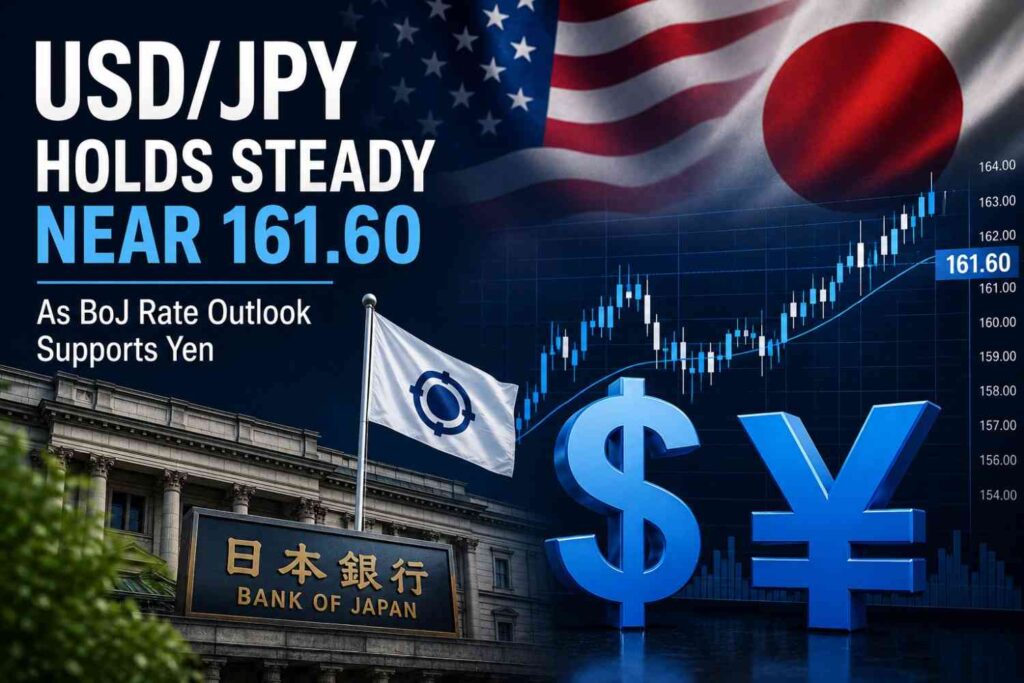
The USD/JPY pair is staying steady near 161.60. This is because traders are thinking about what the Bank of Japan will do with interest rates.
The USD/JPY pair did not move much on Wednesday. It was around the 161.60 level. Investors were looking at what the Bank of Japan said and how strong the US Dollar’s
Some people from the Bank of Japan said they might raise interest rates again if inflation keeps going up. This made people think that the Bank of Japan will keep making changes to its policies. The Bank of Japan has been keeping interest rates low for a long time.
This month the Bank of Japan raised its interest rate to 1%. This was expected. Now people are waiting to see when the Bank of Japan will make its move.
Not everyone thinks the Bank of Japan should raise interest rates quickly. One of the people on the Bank of Japans board Toichiro Asada did not want to raise interest rates. He was worried about the economy and jobs. This shows that the people on the board do not all agree.
Even though people think interest rates in Japan will go up the Yen is not getting much stronger. The US Dollar is still very strong. People want to buy the US Dollar. They think US interest rates will stay high for a long time.
The US Dollar Index is near its level in over a year. This is helping the USD/JPY pair stay near its highs.
Technical Outlook
If we look at the chart the USD/JPY currency pair is moving in a range. It is below the 162.00 area. The pair is still going up in the term. Buyers are in control long as the price stays above the important support levels.
The 160.00 level is very important. If the price goes below this level people might. The price could go down more. On the hand the 162.00 level is still a big obstacle. If the price stays above this level it could go up to highs.
The indicators are still positive. They are not as strong as they were before. This means traders might need something to happen before they make their next big move.
Market Focus
Investors will keep watching what the Bank of Japan says and what happens with inflation in Japan. They will also look at US data to see what will happen with interest rates. Any changes in what people think about interest rates could have an impact, on the USD/JPY pair.
For now the USD/JPY pair is supported by an US Dollar. The fact that the Bank of Japan might raise interest rates again is helping to keep the price from going up much. The USD/JPY pair is staying near the 162.00 level.

The Forex News for Traders is out. The Dollar is really strong now. It is near its point in the last twelve months. This is important for traders to know because a strong Dollar affects every major currency.
The Dollar is strong because people think the Federal Reserve might raise interest rates again. Before people thought the Fed would start making it easier to borrow money. But inflation is still a problem so people are changing their minds.
This means people want to buy the Dollar, which makes it even stronger. The Dollar Index is close to its point this year.
New traders should pay attention to this. It shows how important it is to think about what central banks might do in the future. Currency prices are not just about what’s happening today. They are also about what traders think will happen tomorrow.
The euro is not doing well. The European Central Bank is okay with how inflation’s going so they do not think they need to raise interest rates. This makes the Dollar look even better.
The Japanese yen is still struggling. The Japanese government is trying to help it. It is not working. The USD/JPY is at a point where the Japanese government might step in which could make the market really volatile.
Everyone is waiting for the U.S. PCE inflation report. This report is important to the Federal Reserve. If it is higher than expected it could mean another interest rate hike, which would make the Dollar even stronger. If it is lower it could mean the Dollar will not do well.
When it comes to trading do not just look at the headlines. Look at how the market reacts to the news. Sometimes the news is good. The currency still goes down because people already knew it was coming.
Now the market is really sensitive to inflation and interest rates. There are a lot of reports coming out this week so traders should be ready, for a lot of ups and downs.
The important thing for new traders to know is to follow what is happening in the economy. Understand why central banks are important.. Do not forget how much big news can affect currency prices.
As the week goes on the Dollar will probably do well if the economic reports support the Federal Reserves plans. Traders should be careful and ready to change their plans if they need to.
Trending News






Top Trusted Forex Broker List





Protect Yourself
from Scam Brokers
Trading scams happen every day. That’s why we review and verify every broker we feature, helping you make safer investment decisions.

Faqs
1. What is Infoforexbroker?
Infoforexbroker is an online platform that provides information, reviews, and comparisons of forex brokers worldwide. The website helps traders evaluate brokers based on factors such as regulation, trading platforms, spreads, account types, and customer support.
2. Is Infoforexbroker a forex broker?
No. Infoforexbroker is not a forex broker and does not offer trading services. It is an informational website designed to help traders research and compare brokers before opening a trading account.
3. How does Infoforexbroker review forex brokers?
Infoforexbroker checks out brokers in a lot of ways. They look at things like
- Regulation and safety
- The kinds of trading platforms they have, like MT4 and MT5
- The types of accounts you can have and how much money you need to put in
- The spreads and commissions they charge
- What you can trade
- How you can put money in. Take it out
- How they help their customers.
Infoforexbroker does this to help traders find the broker that’s right, for them. Infoforexbroker wants traders to have all the information they need to make a choice.
4. Are the broker reviews on Infoforexbroker unbiased?
The website aims to provide objective and research-based broker information. However, traders should always conduct their own research and verify details with official broker websites or regulatory authorities.
5. What is a forex broker?
A forex broker is a financial service provider that allows traders to buy and sell currencies in the foreign exchange market. Brokers provide trading platforms, liquidity, leverage, and market access for retail traders.
6. How can I choose the best forex broker?
When choosing a forex broker, consider the following factors:
- Regulation and licensing
- Trading costs (spreads and commissions)
- Platform reliability
- Deposit and withdrawal options
- Customer support quality
- Available trading instruments
Choosing a regulated broker helps ensure a safer trading environment.
7. Does Infoforexbroker provide trading advice?
No. Infoforexbroker does not provide financial or investment advice. The information on the website is intended for educational and informational purposes only.
8. Can beginners use Infoforexbroker?
Yes. The website is useful for both beginners and experienced traders because it provides broker comparisons, trading guides, and educational resources about forex trading.
9. How often is broker information updated?
Broker information and reviews are typically updated regularly to reflect changes in trading conditions, regulations, or broker services.