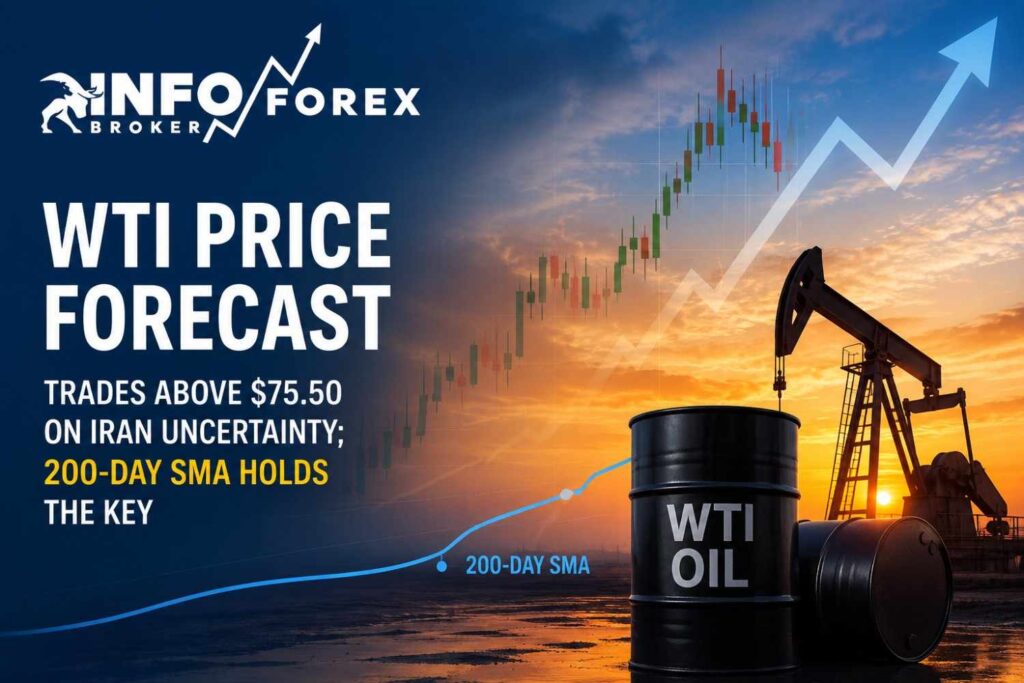
West Texas Intermediate (WTI), the US benchmark for crude oil, is trading slightly higher during Friday’s Asian session, holding above the $75.50 level. The commodity remains supported by geopolitical developments but continues to struggle for stronger upside momentum after recovering from this week’s low near $72.80, its weakest level since early March.
Market sentiment remains cautious after US Vice President JD Vance canceled his scheduled visit to Switzerland for discussions with Iran, raising questions about the progress of diplomatic efforts in the region. At the same time, renewed Israeli air strikes in Lebanon have increased concerns over regional stability, providing additional support to crude prices.
However, gains remain limited as shipping activity through the Strait of Hormuz has resumed, allowing previously delayed oil supplies from the Middle East Gulf to reach global markets and easing some concerns about supply disruptions.
From a technical standpoint, crude oil remains under pressure following this week’s move below the $83.00 area, which had served as the lower boundary of a trading range that had been in place for nearly three months. Momentum indicators continue to favor sellers, with the Relative Strength Index (RSI) hovering near oversold levels and the Moving Average Convergence Divergence (MACD) remaining in negative territory.
Despite the broader bearish outlook, WTI continues to find support above its 200-day Simple Moving Average (SMA), currently located around $72.80. This level remains a key area to watch. A decisive break below it could expose the market to deeper losses, while continued support may encourage buyers to step in on dips.
For now, traders are likely to wait for a stronger directional signal before committing to fresh positions. A sustained recovery would require improving momentum indicators and a clear shift in market sentiment, while further downside would depend on a confirmed break below long-term support.