
Market News
Latest Forex News
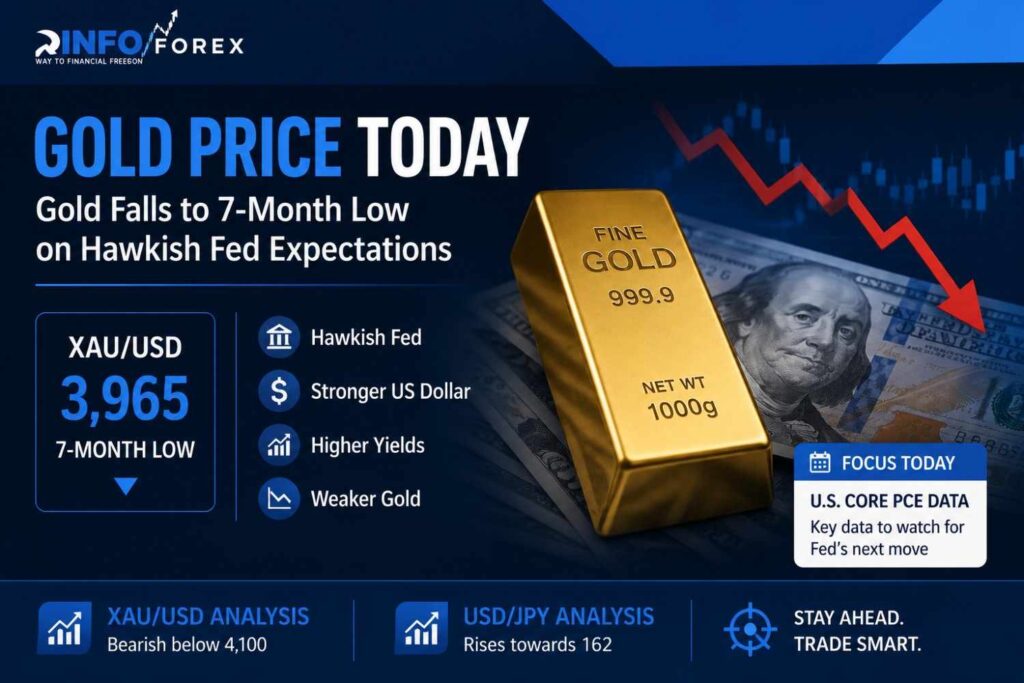
Gold prices (XAU/USD) recovered from their lowest level since November 2025 during Tuesday’s Asian session, moving higher as European trading began. Despite the bounce, the broader outlook remains cautious as a stronger US Dollar continues to weigh on the precious metal.
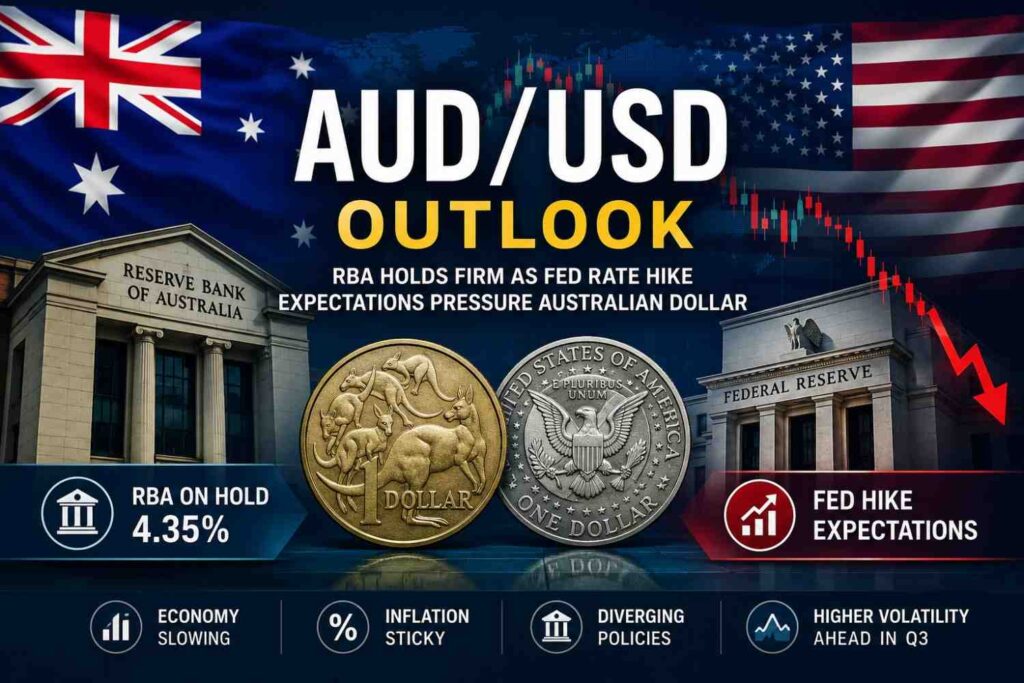
The US Dollar remains well supported after geopolitical developments in the Middle East and growing expectations that the Federal Reserve could keep interest rates higher for longer. Since gold does not generate interest, rising rate expectations often reduce its appeal compared with yield-bearing assets.
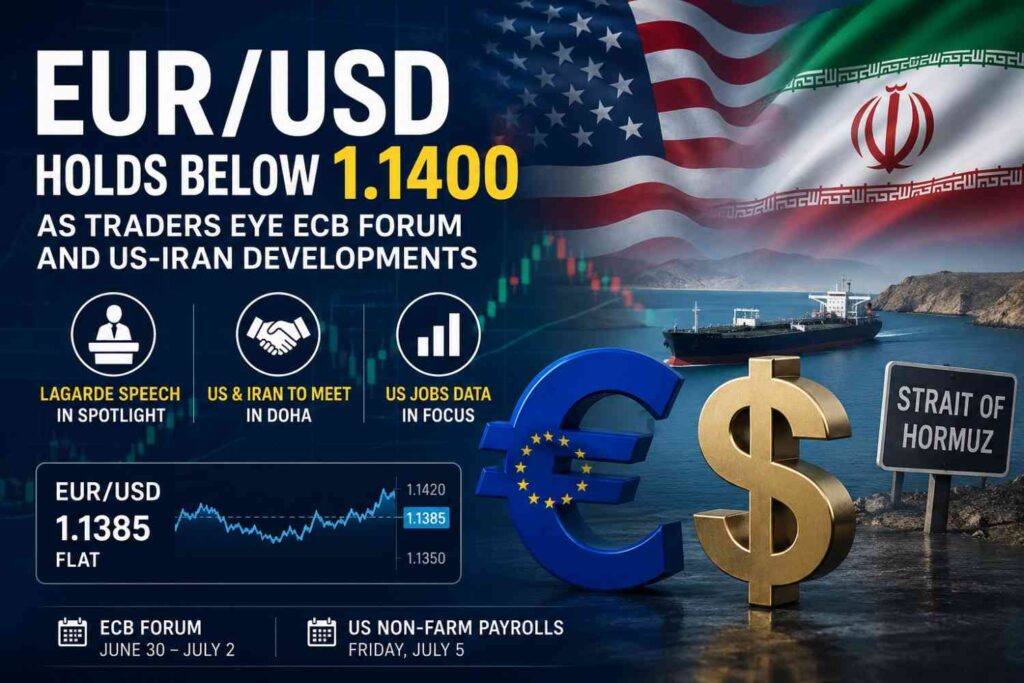
Reports indicated that the United States and Iran were working to reduce tensions after recent military exchanges near the Strait of Hormuz. US President Donald Trump also stated that Iran had requested a meeting in Doha, Qatar. However, Iranian officials denied that any formal technical discussions were scheduled this week. These mixed developments have kept investors alert, supporting demand for the US Dollar while limiting gold’s upside.
Markets also remain focused on inflation risks, which have increased following renewed tensions in the region. Combined with the Federal Reserve’s firm stance on monetary policy, investors continue to expect the possibility of additional rate hikes. Current market pricing suggests there is a strong chance of another rate increase later this year, helping maintain support for the US Dollar and reducing demand for non-yielding assets such as gold.
The Japanese Yen also weakened sharply against the US Dollar, reaching its lowest level in decades, adding further pressure across precious metal markets.
Investors are now watching several important US economic releases, including the Conference Board Consumer Confidence Index and the JOLTS Job Openings report. Later this week, attention will shift to Federal Reserve Chair Kevin Warsh’s speech at the European Central Bank Forum in Sintra, followed by the closely watched US Nonfarm Payrolls (NFP) report. These events could provide fresh direction for both the US Dollar and gold prices.
Technical Analysis
Gold remains under pressure despite Tuesday’s recovery. The price continues to trade below the key $4,000 level, keeping the short-term bearish trend intact. Previous attempts to move above the 100-period Simple Moving Average on the four-hour chart have repeatedly failed, reinforcing resistance in the higher price zone.
The MACD indicator remains slightly below the zero line, suggesting bearish momentum is easing but has not yet turned positive. Meanwhile, the Relative Strength Index (RSI) is hovering near oversold territory, indicating that selling pressure may be slowing, although there is still no confirmed signal of a bullish reversal.
On the upside, immediate resistance is seen around $4,045. A sustained move above this level could allow gold to retest the $4,100 area. However, stronger resistance is expected near the 100-period SMA around $4,180, where sellers may re-enter the market. A decisive break above that level would be needed to improve the overall technical outlook.
Until then, rallies are likely to face selling pressure, while the combination of a firm US Dollar and expectations of higher US interest rates continues to limit gold’s recovery.
Most Recent News

Today’s economic calendar does not have any Red Folder or Orange Folder event scheduled. Because of this, the possibility of big fundamental moves in the market may be less, but traders should keep an eye on ECB speeches and US economic data.
In the European session, Switzerland’s SECO Consumer Climate data will be released first, whose forecast is -38 while the previous reading was -40.
After this, the market’s focus will be on the speeches of Christine Lagarde and Joachim Nagel. Comments from both officials can influence the euro’s direction in the short term, especially if any new signal is received regarding inflation or future interest rate policy.
In European data, the forecast for Italian Trade Balance is 5.19B, while the previous figure was 4.71B. Along with this, the forecast for Eurozone Industrial Production is 0.2% and the forecast for Trade Balance is 7.8B. If the actual data comes very different from expectations, volatility can be seen in EUR pairs.
In the North American session, Housing Starts, Manufacturing Sales and Wholesale Sales data will be released for the Canadian dollar. The forecast for Housing Starts is 255K, which is lower than the previous 279K, while Manufacturing Sales is forecast at 4.4%.
In the US session, traders’ attention will be on Empire State Manufacturing Index, Capacity Utilization Rate, Industrial Production and NAHB Housing Market Index.
- Empire State Manufacturing Index: Forecast 13.2 | Previous 19.6
- Capacity Utilization Rate: Forecast 76.2% | Previous 76.1%
- Industrial Production m/m: Forecast 0.3% | Previous 0.7%
- NAHB Housing Market Index: Forecast 36 | Previous 37
These reports do not come in the high-impact category, but if a big surprise is seen in the actual figures then short-term movement can be seen in USD pairs.
Market Movement
In today’s morning market movement, strength is being seen in safe-haven currencies CHF and JPY.
- USDCHF is trading positive around 0.7938.
- USDJPY is staying near 160.11.
- Slight pressure is visible in EURUSD and GBPUSD.
- Selling pressure is also being seen in cross pairs like EURJPY, GBPJPY and EURGBP.
What Is Important For Traders?
Today there is no major high-impact event, so market sentiment and speeches will remain more important.
Comments from ECB President Lagarde can bring volatility in EUR pairs.
During US data releases, short-term movement can come in USD pairs.
In a low-news environment, markets can remain range-bound, so traders should stay cautious of false breakouts.
Along with price action, monitoring both the economic calendar and headlines will be more important today.
Overall, today’s trading session can depend more on central bank commentary, market sentiment and technical levels than on big economic surprises.
Disclaimer:- This article is only for educational and informational purposes. Any information given in it is not financial advice. There is significant risk in Forex trading and you can lose your entire invested capital. Before making any trading decision, definitely consult your financial advisor. Past performance is not a guarantee of future results.

Gold prices stayed under pressure during Thursday Asian trading session slipping at the $4,246-$4,247 area and giving back part of Wednesday recovery from the lowest levels seen since November 2025. Demand for the US Dollar sturdy after conflicting reports emerged regarding a possible peace agreement between the United States & Iran weighing on the valuable metal. Expectations that the Federal Reserve could keep interest rates lifted for longer also limited demand for non- resigned assets such as gold.
US President Donald Trump stated that an agreement with Iran had been reached and supported that a final document could be signed in the coming days. Still optimism faded after Iranian officials indicated that no final verdict had been made. Reports also suggested that Iran Supreme Leader, Mojtaba Khamenei has yet to approve the proposed agreement. According to Iranian media, several key issues including access through the Strait of Hormuz and the release of frozen funds remain pending.
Further doubt emerged after Iranian authorities allegedly stopped a tanker from passing through the strategic waterway without prior coordination. In addition reports indicated that US forces grabbed and destroyed two Iranian attack drones near the Strait of Hormuz. These developments have kept geopolitical concerns alive and supported a reaction in crude oil prices raising worries about inflationary pressures.
Recent US inflation data has supported expectations that the Federal Reserve may maintain a restrictive policy stance. Both the Consumer Price Index (CPI) and Producer Price Index (PPI) pointed to renewed inflationary stresses strengthening the case for higher interest rates. This has continued to support the US Dollar while reducing the appeal of gold.
Despite the current weakness traders remain cautious about increasing bearish positions amid ongoing uncertainty in the Middle East. Nevertheless gold is still on track to record a second successive week of major losses.
Technical Outlook
Gold continues to trade below its 200-day Simple Moving Average (SMA) keeping the short-term outlook tilted to the downside. The metal recently failed to nurture gains above the 23.6% Fibonacci retracement level of the decline from April’s peak suggesting that the latest rebound may have been driven mainly by short-covering activity.
Momentum indicators also point to lingering weakness. The MACD remains in negative territory, while the Relative Strength Index (RSI) stays below neutral levels, indicating that sellers still maintain control despite recent stabilization.
On the upside, immediate resistance is seen near the 23.6% Fibonacci retracement level around $4,229, followed by the 38.2% retracement near $4,355. Additional resistance is located around the 200-day SMA near $4,450 and the 50% retracement level close to $4,456. A sustained move
Disclaimer:- This article is only for educational and informational purposes. Any information given in it is not financial advice. There is significant risk in Forex trading and you can lose your entire invested capital. Before making any trading decision, definitely consult your financial advisor. Past performance is not a guarantee of future results.

Market Brief: today a high-voltage day is going to begin in the Forex market. The European Central Bank is going to announce its interest rate decision, and if the forecast remains correct then this will be a major monetary policy shift for the Eurozone. ECB rate decision, US PPI inflation data and Unemployment Claims — three major triggers are going to be released in the same session. If you are planning to trade today, then definitely read this article till the end.
| Event | Forecast | Previous | Impact |
|---|---|---|---|
| ECB Main Refinancing Rate (EUR) | 2.15% | 2.40% | HIGH |
| ECB Monetary Policy Statement | — | — | HIGH |
| ECB Press Conference | — | — | HIGH |
| US Core PPI m/m | 0.5% | 1.0% | HIGH |
| US PPI m/m | 0.7% | 1.4% | HIGH |
| US Unemployment Claims | 220K | 225K | MED |
| CAD Building Permits m/m | -3.7% | +10.3% | MED |
| Japan Revised Industrial Production m/m | 0.9% | 0.8% | MED |
| US Natural Gas Storage | — | — | LOW |
| US 30-Year Bond Auction | — | — | MED |
| NZ BusinessNZ Manufacturing Index | — | — | LOW |
| NZ Visitor Arrivals m/m | — | — | LOW |
ECB RATE DECISION — TODAY’S BIGGEST MARKET TRIGGER
Today the entire market focus is on the ECB. The European Central Bank is going to reduce its Main Refinancing Rate from 2.40% to 2.15% — meaning a 25 basis point rate cut. This decision will be announced after the Eurogroup Meetings, and along with it the Monetary Policy Statement will also be released which will define the entire monetary direction of the Eurozone.
But the real game will start in the ECB Press Conference. Traders will look at every single word of the ECB President through a microscope. The question is: is this dovish cutting cycle stopping here, or are more rate cuts going to come in the next meetings? If the President’s tone remains more dovish then a strong selling wave can come in EUR/USD.
Historically it has been seen that when the ECB delivers a rate cut and the forward guidance is also dovish, then EUR/USD can fall by 80-120 pips in a single session. Therefore the Press Conference is today’s most critical event — not just the rate cut number.
US PPI AND UNEMPLOYMENT CLAIMS — DOLLAR’S DIRECTION?
US PPI (Producer Price Index) is a leading indicator for future inflation. Today’s forecast is 0.7% whereas the previous reading was 1.4% — a significant slowdown. If the actual data also comes around the forecast or below it, then it will mean that the pressure of US inflation is reducing somewhat. This can open the path for rate cuts for the Fed, because of which the Dollar can soften.
But if PPI gives an upside surprise — comes above 0.7% — then Dollar bulls will become active again, because the Fed may have to keep rates high. In this case strong downside movement is possible in both EUR/USD and GBP/USD.
The forecast for US Unemployment Claims is 220K vs. previous 225K. If claims come even lower then the US labor market will be considered strong — Dollar positive. If claims unexpectedly increase then immediate weakness can be seen in the Dollar. Since both data are coming at the same time, the Dollar’s direction will be defined very clearly.
CURRENCY PAIR ANALYSIS — BULLISH VS BEARISH SCENARIOS
| Currency Pair | Bullish Scenario | Bearish Scenario |
|---|---|---|
| EUR/USD | ECB hawkish tone or no rate cut + weak US PPI could push EUR/USD currency pair toward 1.0900+. Sustaining above 1.0790 may confirm bullish momentum. |
ECB dovish stance + strong US PPI could send EUR/USD toward the 1.0680–1.0640 zone. Further downside possible if future ECB cuts are hinted. |
| GBP/USD | Risk-on sentiment and a weaker Dollar may push GBP/USD above 1.2750. Stronger UK economic conditions could support further gains. |
A stronger Dollar and risk-off mood could drive GBP/USD toward the 1.2580–1.2540 support area. |
| USD/JPY | Strong US PPI and lower unemployment claims may lift USD/JPY above 158.50. A cautious BoJ could keep the Yen under pressure. |
Weak US data and risk-off sentiment may boost Yen demand, sending USD/JPY toward 155.00. A break lower could target 153.80. |
| AUD/USD | Improving risk appetite and a weaker Dollar may help AUD/USD hold above 0.6500. Strong commodity prices could add further support. |
Risk aversion and a stronger Dollar could push AUD/USD toward the 0.6380–0.6350 support zone. Weak NZ data may add pressure. |
| USD/CAD | If Canadian Building Permits come in weaker than the forecast of -3.7% and US data is strong, USD/CAD may move above 1.3750. |
Weak US PPI and rising oil prices could strengthen the Canadian Dollar, potentially pushing USD/CAD below 1.3550. |
WHAT SHOULD TRADERS DO TODAY?
Today volatility can remain quite high in the market because ECB rate decision and US inflation-related data are both being released in the same session. Spreads can also widen — especially in EUR/USD at the time of the news release.
My suggestion would be that instead of taking aggressive entries in the first 15-30 minutes of the news release, wait for market direction to be confirmed. The initial spike is often false — the real move comes later when the market digests the data.
If the ECB takes a more dovish stance than expected — strongly hints at future cuts — then sustained selling pressure can be seen on EUR/USD. Enter EUR shorts only after confirmation.
If US PPI comes stronger than expected then the Dollar can strengthen, because of which downside movement can be seen in EUR/USD and GBP/USD. The combination of both data will define today’s biggest trades.
Give priority to capital preservation. Use a stop loss in every trade and risk only a maximum of 1-2% of the account. On high-impact news days like today, over-trading is the biggest mistake. If you are a new trader then only observe — practice on demo.
TRADING OPPORTUNITIES TO WATCH TODAY
| BEST PAIR TO WATCH | EUR/USD Outlook |
|---|---|
| Bullish Scenario | ECB does not cut rates or delivers a hawkish press conference combined with weak US PPI data. This could support a EUR/USD recovery toward 1.0850–1.0900. If price sustains above 1.0790, bullish momentum may continue. |
| Bearish Scenario | ECB delivers a dovish rate cut while US PPI comes in stronger than expected. This could trigger a breakdown below 1.0700. Maintaining patience and waiting for confirmation remains an important part of today’s trading strategy. |
CONCLUSION — DISCIPLINED TRADING WINS
Today is clearly a news-driven day. ECB rate cut, Monetary Policy Statement, Press Conference, US PPI and Unemployment Claims — all of these together will create a high-energy environment in the market where direction can change rapidly. The biggest mistake traders can make today is jumping blindly because of FOMO. Remember — money is made in Forex quietly and with discipline, not in excitement. Today’s mantra is: OBSERVE FIRST, TRADE SECOND. Let the market tell where it wants to go. First watch the first 30 minutes’ candle pattern, price action and volume — after that make your trade setup. The trader who maintains patience today, follows proper risk management, and keeps emotions aside — only that trader will remain profitable in this volatile session. Good luck and safe trading!
Disclaimer: This article is only for educational and informational purposes. Any information given in it is not financial advice. There is significant risk in Forex trading and you can lose your entire invested capital. Before making any trading decision, definitely consult your financial advisor. Past performance is not a guarantee of future results.

Today’s trading session in the forex market started relatively calm because there is no major red-folder event present in the economic calendar. Nevertheless, some important data releases from the Asian session shaped market sentiment. New Zealand’s Manufacturing Sales and the UK’s Retail Sales remained stronger than expected, which reflects the stability of demand and business activity in the respective economies. At the same time, China’s Trade Balance figures came much better than forecasts, which supported the global trade outlook and risk sentiment, and a positive tone was seen in Asian markets.
Australian economic data remained mixed, where a decline was seen in Consumer Sentiment, while Business Confidence improved compared to last month but is still remaining in the negative zone. In the European and US sessions, traders will keep an eye on medium-impact reports such as German Industrial Production, German Trade Balance, US Trade Balance, and Canadian Trade Balance. In the absence of high-impact events, the direction of currency markets today can largely depend on incoming economic data and overall market sentiment.
Currency Strength Analysis: European Currencies Lead the Market
Today in the market we can see that some currencies are strong and some are weak. The European currencies are doing well. Some currencies that are related to commodities and safe havens are not doing so great. If we look at the numbers, from Market Watch we see that EURUSD and GBPUSD are still going up which means the Euro and the Pound are strong. Now people who trade are thinking about what will happen with the economy and what the central banks will do. That is why things are getting a little more unpredictable.
Key Forex Focus: US Dollar and Central Bank Expectations
In today’s trading session, the greatest focus will remain on high-impact news related to the US Dollar. Upcoming US inflation data, Federal Reserve comments, employment figures, and interest rate expectations can decide market direction. If US data comes stronger than forecast, fresh buying can be seen in the Dollar, while weak data can give further upside momentum to EURUSD and GBPUSD. For professional traders, today’s key focus will remain on USD news events, ECB and Bank of England updates, and overall risk sentiment, because these factors can significantly influence short-term forex trends.
Geopolitical Risks Return to the Spotlight
Global geopolitical tensions are once again becoming a major risk factor for financial markets. Concerns regarding the weakening of the Iran-Israel ceasefire, the increasing Taiwan-China South China Sea standoff, and global weather disruptions have made investors cautious. Any military escalation in the Middle East can cause crude oil prices to rise sharply, which will fuel inflation and impact the interest rate outlook of central banks. At the same time, tensions in the Taiwan Strait can put pressure on the semiconductor supply chain and global trade sentiment, due to which volatility in risk assets can increase.
Iran War Ceasefire Frays, Taiwan-China South China Sea Standoff, El Niño | Geopolitics Weekly
For people who trade forex managing risk is really important. If things get worse with countries not getting some currencies like the USD, CHF and JPY will do well because they are safe. Forex traders need to be ready for changes in the USDJPY, EURJPY and GBPJPY pairs. If oil prices go up the US Dollar and Canadian Dollar will probably do okay. Currencies like the AUD and NZD that are sensitive, to risk will have a tough time. As a trading strategy, during high-impact geopolitical headlines, it will be better to use smaller position sizes, tighter risk management, and avoid overexposure around major news releases. Keep an eye on market sentiment, because in the current environment, headlines can prove to be a more powerful catalyst than technical levels.

Today is a quiet day for the economy so traders will be keeping an eye on how people are feeling about the market. There are no events happening that will affect the forex market so things will probably stay calm.
Japans Economy Watchers Sentiment is looking good it went up from 40.8 to 43.6 which is a sign for Japans economy.. Germanys Factory Orders are down by 2.2%, which might put a little pressure on the Euro. On the hand people are hoping that the Eurozone Sentix Investor Confidence and Switzerlands Consumer Climate data will be good which could make investors feel more positive.
During the session traders will be looking at data from Australia, New Zealand and China. Chinas Trade Balance is expected to go up from 586B to 637B yuan. The USD-denominated surplus is expected to reach $88.7B, which could make people feel more positive about risk and commodity currencies like the AUD and NZD. Because there are no economic events happening currency pairs will probably just stay in the same range today and the market will depend on how people are feeling and Chinas trade figures.
USD Weakness Drives Mixed Session Across Major Currency Pairs
The USD is a bit weak so it is having an effect on the major currency pairs. The EUR/USD is staying pretty stable between 1.15186 and 1.15197 while the GBP/USD is doing well up to 1.33282. The USD/JPY is not doing much, around 160.255 and the USD/CHF is also under pressure up to 0.79766. The AUD/USD and NZD/USD are not moving much just staying in the range.
There is movement in the cross pairs. The EUR/JPY is doing well up to 184.601 and the GBP/JPY is also strong up to 213.588.. The CHF/JPY and NZD/JPY are not doing well and the CAD/JPY is also weak around 114.904. So the European currencies are doing better against the USD and JPY. People are still not sure, about the yen crosses.
Global Geopolitical News
Global geopolitical developments were seen indirectly influencing forex market sentiment today. Investors remained focused on ongoing international tensions and policy expectations, due to which safe-haven demand was selectively reflected in currency pairs.
Risk sentiment in the market remained mixed, where occasional strength was seen in safe-haven currencies such as JPY and CHF due to geopolitical uncertainty, while risk-linked currencies such as AUD and NZD remained comparatively stable and range-bound.
Market Impacted Currencies: JPY, CHF, USD, AUD, NZD

Canada & US Labor Market Data: Forex Market Volatility Expected
Canada and United States labor market data released today (05/06/2026) has increased the possibility of strong volatility in the forex market. Canada’s Employment Change came in at 10.6K, while the market was expecting a decline of -17.7K, showing a much better-than-expected performance in the labor market. At the same time, the Unemployment Rate remained stable at 6.9%. This data is being considered positive for the Canadian Dollar and strength may be seen in CAD.
On the US side, Average Hourly Earnings came in at 0.3%, better than the 0.2% forecast, but the most important NFP report showed only 85K jobs added while the market was expecting 115K. The Unemployment Rate remained unchanged at 4.3%. In my view, strong wage growth will try to support the USD, but weak NFP data may keep pressure on the dollar. If the market gives more importance to the jobs data, USD may appear weak and CAD relatively strong, which could lead to bearish movement in USDCAD.
Major Forex Currency Pair Outlook
EUR/USD is trading around 1.1616 and today’s price action is reflecting dollar weakness. US NFP came in at 85K while the forecast was 115K, which is keeping pressure on the USD. In my opinion, as long as the currency pair holds above 1.1600, buyers may remain in control and the market may try to move toward the 1.1650 – 1.1700 area.
GBP/USD is trading strongly at the 1.3429 level. Weak US labor data has supported the pair and dollar sellers appear active. In my view, if the pair sustains above 1.3400, bullish momentum may continue and buyers may target higher levels. A pause in this rally may only be seen if the dollar recovers.
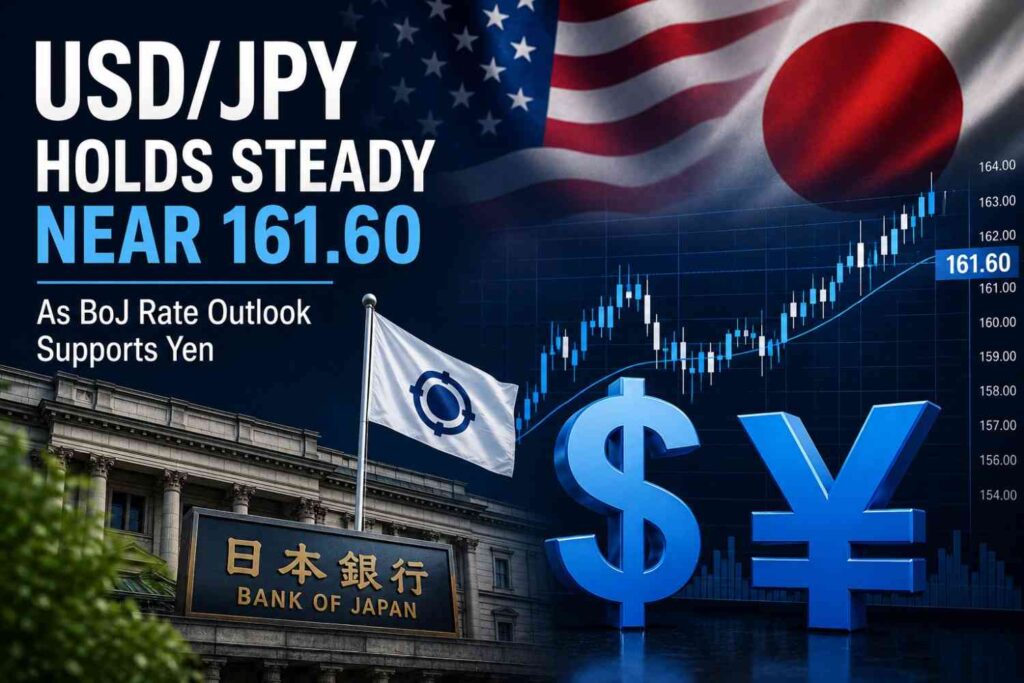
USD/JPY is trading around 159.93 and selling pressure is being seen in the pair. Along with weak NFP, the market appears to be shifting toward safe-haven currencies, benefiting the JPY. In my opinion, as long as US data sentiment remains weak, a downside correction may be seen in USD/JPY and sellers may remain dominant in the market.
US Dollar Index (DXY):
The biggest factor for the dollar today has been the NFP report, which came in at 85K while the market was expecting 115K. Although Average Hourly Earnings remained at 0.3%, better than the 0.2% forecast, traders currently appear to be focusing more on weak job growth. In my opinion, short-term pressure may remain on the DXY and until a strong bullish catalyst emerges, recovery in the dollar may appear limited.
Federal Reserve (Fed) Testimony & USD Impact
The latest testimony from the Federal Reserve described the banking system as sound and resilient, with strong bank capital strength and liquidity buffers. The Fed also highlighted that lending growth and profitability in the banking sector remain stable, but the share of non-bank financial institutions (NBFIs) is increasing rapidly, affecting competition with traditional banks. At the same time, the Fed’s focus on AI and cybersecurity risks is clear, as it aims to modernize the financial system while maintaining stability. Overall, the tone provides medium-term support to the USD, as financial system stability and regulatory clarity send a positive signal.
Bank of Japan (BOJ) Consumption Focus & JPY Outlook
On the other hand, the Bank of Japan (BOJ) has focused on private consumption, which is approximately 50% of Japan’s GDP. The BOJ’s Consumption Activity Index (CAI) measures short-term consumption activity of goods and services, which provides an idea of the economy’s business cycle. The BOJ’s data approach shows that the main driver of growth in the Japanese economy is domestic demand, therefore consumption data will be an important signal for the future direction of the yen. If consumption remains strong, the JPY may get support, whereas weak consumption will keep the BOJ on an accommodative stance, due to which the yen may remain under pressure.