
Market News
Latest Forex News
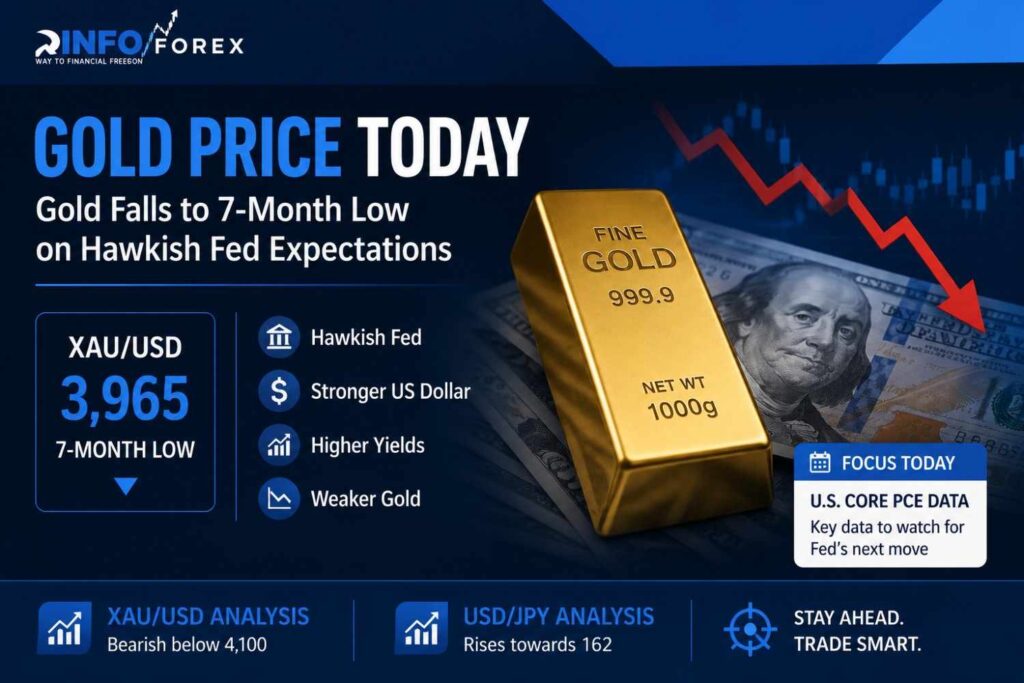
Gold prices (XAU/USD) recovered from their lowest level since November 2025 during Tuesday’s Asian session, moving higher as European trading began. Despite the bounce, the broader outlook remains cautious as a stronger US Dollar continues to weigh on the precious metal.
The US Dollar remains well supported after geopolitical developments in the Middle East and growing expectations that the Federal Reserve could keep interest rates higher for longer. Since gold does not generate interest, rising rate expectations often reduce its appeal compared with yield-bearing assets.
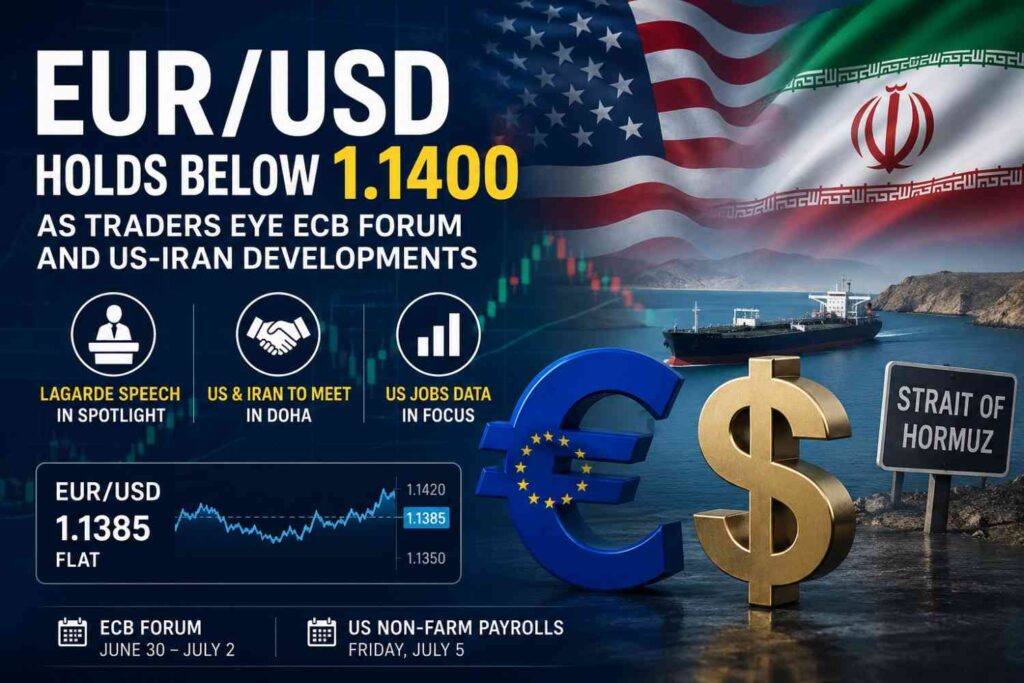
Reports indicated that the United States and Iran were working to reduce tensions after recent military exchanges near the Strait of Hormuz. US President Donald Trump also stated that Iran had requested a meeting in Doha, Qatar. However, Iranian officials denied that any formal technical discussions were scheduled this week. These mixed developments have kept investors alert, supporting demand for the US Dollar while limiting gold’s upside.
Markets also remain focused on inflation risks, which have increased following renewed tensions in the region. Combined with the Federal Reserve’s firm stance on monetary policy, investors continue to expect the possibility of additional rate hikes. Current market pricing suggests there is a strong chance of another rate increase later this year, helping maintain support for the US Dollar and reducing demand for non-yielding assets such as gold.
The Japanese Yen also weakened sharply against the US Dollar, reaching its lowest level in decades, adding further pressure across precious metal markets.
Investors are now watching several important US economic releases, including the Conference Board Consumer Confidence Index and the JOLTS Job Openings report. Later this week, attention will shift to Federal Reserve Chair Kevin Warsh’s speech at the European Central Bank Forum in Sintra, followed by the closely watched US Nonfarm Payrolls (NFP) report. These events could provide fresh direction for both the US Dollar and gold prices.
Technical Analysis
Gold remains under pressure despite Tuesday’s recovery. The price continues to trade below the key $4,000 level, keeping the short-term bearish trend intact. Previous attempts to move above the 100-period Simple Moving Average on the four-hour chart have repeatedly failed, reinforcing resistance in the higher price zone.
The MACD indicator remains slightly below the zero line, suggesting bearish momentum is easing but has not yet turned positive. Meanwhile, the Relative Strength Index (RSI) is hovering near oversold territory, indicating that selling pressure may be slowing, although there is still no confirmed signal of a bullish reversal.
On the upside, immediate resistance is seen around $4,045. A sustained move above this level could allow gold to retest the $4,100 area. However, stronger resistance is expected near the 100-period SMA around $4,180, where sellers may re-enter the market. A decisive break above that level would be needed to improve the overall technical outlook.
Until then, rallies are likely to face selling pressure, while the combination of a firm US Dollar and expectations of higher US interest rates continues to limit gold’s recovery.
Most Recent News

There is a possibility of increased volatility in the forex market today because several central bank officials’ speeches are scheduled throughout the day. Traders will first keep an eye on RBA Governor Michele Bullock’s speech, as her comments may provide signals about the future interest rate outlook. In addition, Australia’s Goods Trade Balance is forecast at 1.79B, which is better than the previous reading of 1.23B and may support the AUD. In the European session, ECB President Christine Lagarde’s speech and Eurozone Retail Sales data (-0.3% forecast vs -0.1% previous) may set the direction for the Euro, while the UK Construction PMI with a forecast of 40.4 may affect the movement of the Pound.
Federal Reserve Commentary and Labor Market Data Hold the Key for USD
In the US session, the focus will remain on labor market data and comments from Federal Reserve officials. Initial Jobless Claims are forecast at 214K, which is close to the previous reading of 215K and indicates the strength of the labor market. At the same time, speeches by FOMC members Logan, Bark in, Bowman, Daly, and Schmid may influence market sentiment. Revised Nonfarm Productivity is forecast at 0.5% and Revised Unit Labor Costs at 2.4%, which will impact the outlook for inflation and economic growth. If Fed officials maintain a hawkish tone, strength may be seen in the US Dollar, while dovish comments may become a reason for profit booking and dollar weakness in the market.
AUD Gains Momentum Ahead of RBA Governor Bullock’s Speech
Mixed sentiment is being seen in the forex market today. The Australian Dollar appears relatively strong, with AUDUSD trading around 0.71288 and AUDJPY also maintaining gains. This strength is receiving support from RBA Governor Michele Bullock’s speech scheduled for today and Australia’s better Goods Trade Balance forecast. On the other hand, pressure remains on the Euro, with EURUSD trading at 1.16093 while weakness is expected in Eurozone Retail Sales data. In my view, if Bullock maintains a hawkish tone, buying opportunities may be seen in AUD pairs, especially in AUDUSD and AUDJPY.
Dollar Holds Firm as Markets Monitor US Economic Data
In the US session, traders’ focus will remain on Initial Jobless Claims and comments from Federal Reserve officials. USDJPY remains strong near 159.88, which reflects the overall strength of the Dollar, while GBPUSD is trading at 1.34270 and waiting for BOE Governor Bailey’s speech. If Fed members show a strict stance against inflation and Jobless Claims come in as forecast or better, further strength may be seen in the Dollar. I believe that selling pressure in EURUSD and bullish momentum in USDJPY may provide better opportunities for traders today.
US Dollar Climbs to Eight-Week High as Inflation Concerns Persist
The US Dollar has shown strength for the third consecutive session and has reached its highest daily close in eight weeks. Strong US economic data, coupled with inflation staying put and Fed officials being pretty hawkish, has kept the dollar robust. The ISM Services PMI hit 54.4, while the Prices Paid Index hit a four-year high of 71.4, showing that inflation isn’t budging. The dollar’s strength shows in market watch too; USDJPY is at 159.88 and USDCHF is steady at 0.7906. I reckon if US data keeps coming in strong, buys might keep flocking to the dollar on dips.
Euro and Pound Remain Under Pressure Ahead of Key Events
On the flip side, the Euro and Pound are under pressure. EURUSD and GBPUSD are hanging around 1.1609 and 1.3427, respectively. Today, expect key insights from ECB President Lagarde and BOE Governor Bailey; their talks could really move things. Meanwhile, folks are tweaking their bets before US Jobless Claims and Nonfarm Payrolls. Also, the strong dollar is hitting gold and risky investments. If Fed officials stay strict about inflation and jobs data beats forecasts, sales in EURUSD and gains in USDJPY might amp up. Traders should watch out for that.

Today, on 03/06/2026, several major changes have emerged in the currency pairs. In today’s Forex news update, numerous important developments have been covered, such as the changes within various central banks, the key speeches covered, the movements in currency pairs, and much more. Everything that a Forex trader needs to monitor, including all the major news and critical factors, has been covered. So, first of all, we will begin with the Economic Calendar:
Economic Calendar Highlights: Eurozone Inflation, BOE Speech & US Jobs Data
The primary focus in the Forex market will remain on the Eurozone inflation data and BOE Governor Bailey’s speech. The Euro received support as Core CPI came in at 2.5%, surpassing the forecast of 2.4%, while Headline CPI remained stable at 3.2%. Strong inflation figures have reduced market expectations of aggressive ECB rate cuts, which is a positive signal for the EUR.
During the UK session, BOE Governor Andrew Bailey’s speech (7:30 PM IST) will be a high-impact event. Should Bailey remain hawkish on inflation, there will be upside pressure on GBP. On the other hand, in the US, JOLTS Jobs Openings printed 7.62M, way ahead of expectations of 6.87M. EUR, GBP, and USD pairs are likely to face volatile trading sessions today.
USD and Major Currencies Outlooks
EUR/USD: The EUR/USD pair is trading firmer amid higher-than-expected inflation data in Europe. European core consumer price index reached 2.5% versus expectations of 2.4%, indicating lower rate cut expectations from the ECB. As a result, EUR/USD stays strong near 1.16221 levels supported by buyers’ activity.
GBP/USD: UK data delivered mixed signals. Mortgage Approvals came in better than forecast, while M4 Money Supply indicated a slowdown. At the same time, traders are awaiting BOE Governor Bailey’s speech, which has kept GBP/USD trading under pressure around 1.34536. The market is now looking to Bailey’s tone for the next directional cue.
USD/JPY: Strength in the US labor market continues to support the Dollar. JOLTS Job Openings came in at 7.62M, substantially above the 6.87M forecast. Following the strong US data, USD/JPY is trading above 159.90, with Dollar bulls appearing active in the market.
US Dollar Index (DXY): The primary driver of Dollar strength today is the strong JOLTS report. Better employment demand figures have reinforced the Fed’s rate outlook, keeping the Dollar Index firm and supporting a buying sentiment across USD-related pairs.
Central Bank Updates & Forex News: ECB, BOE & USD Developments Today
• ECB Vice-President Boris Vujčić delivered a keynote speech at Iceland’s Currency Options Conference. They are analyzing his statements in relation to the future policy stance of the ECB and expectations for inflation.
• The Bank of England announced that it has initiated a consultation process to design banknotes featuring wildlife for the next series of the British currency. There is no correlation between this news item and monetary policy, so its impact on the pound in the short-term period should be minimal.
• In terms of politics in the United States, it is worth noting that the appointment by President Donald Trump of the head of housing Bill Pulte as acting intelligence director was made.
ECB Update: ECB Executive Board member Isabel Schnabel, while talking about stablecoins, gave a warning that their rapid growth can create challenges for future financial stability. She said that just as money market funds face pressure during stress periods, in the same way stablecoins can also give rise to liquidity risks. These comments signal that the ECB may further increase its focus on digital asset regulation.
BoJ Update: The latest balance sheet figures of the Bank of Japan show that the bank is still maintaining massive liquidity support, where government bond holdings and banking system deposits are at quite elevated levels. For forex traders, this is a reminder that the BoJ currently does not appear to be coming out of its accommodative policy anytime soon, due to which pressure on the yen and the theme of policy divergence may continue to remain in the market.
What Is Important for Forex Traders?
Today the focus will be on GBP because at 7:30 PM Andrew Bailey will give testimony before the House of Lords Economic Affairs Committee. As the BOE Governor, his comments can give indications about future interest rate policy. If Bailey shows concern regarding inflation or talks about keeping rates high for a longer time, then strength can be seen in GBP. Traders can derive monetary policy clues from his speech and identify short-term trading opportunities in GBP/USD and GBP crosses.
On the other hand, US JOLTS Job Openings data came at 6.87 million, which remained equal to the market forecast of 6.87 million. This data shows that the US labor market is still stable, but no positive or negative surprise was received. For forex traders, this means that the immediate data-driven impact on USD may remain limited. However, this report helps in assessing the Federal Reserve’s future rate expectations, therefore traders can combine it with upcoming employment and inflation data to estimate the next direction of the USD.
Major Forex Pairs Analysis & Trader Outlook
EUR/USD: EUR/USD is trading at 1.1637 and broad strength of the Euro is visible in today’s currency board. The reason for this is relatively hawkish comments from ECB officials and weakness in the USD. Along with this, US JOLTS Job Openings data remained equal to the forecast at 6.87M, which did not give any fresh support to the dollar. If the pair holds above 1.1600, then buyers’ control may remain intact and traders can look for upside continuation opportunities.
GBP/USD: GBP/USD is trading strongly at 1.3465. The Pound is getting support because the market is waiting for BOE Governor Andrew Bailey’s speech today. Traders are expecting that Bailey can give guidance on inflation and interest rates. If his tone remains hawkish and indications of delaying rate cuts are received, then more strength can come into GBP. Because of this, GBP/USD is one of the most closely watched pairs in the forex market today.
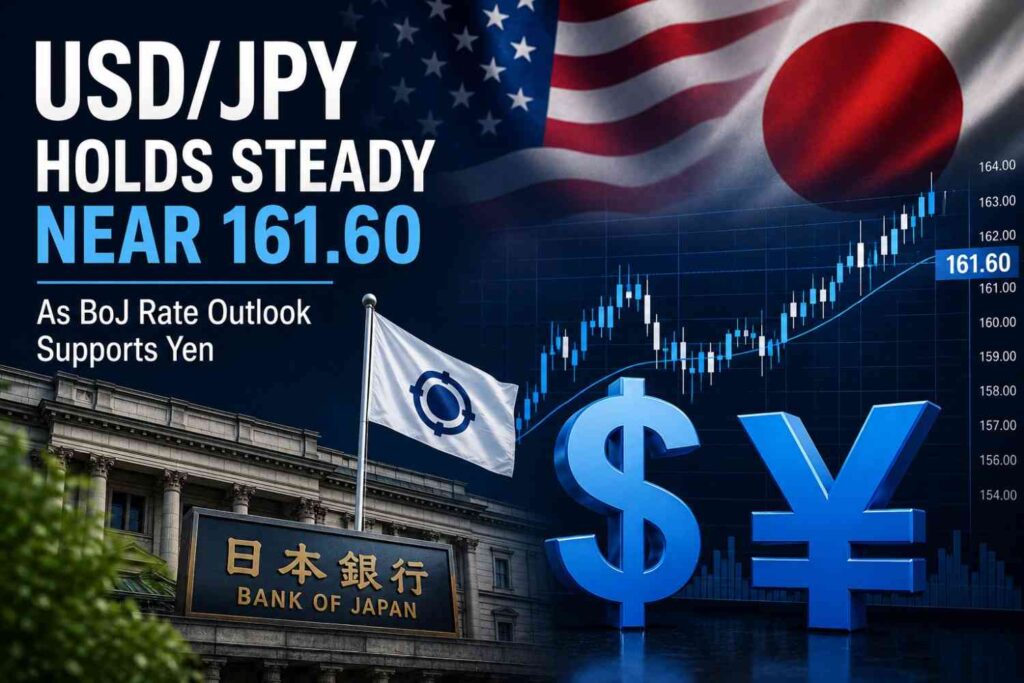
USD/JPY: USD/JPY is trading at 159.73 and downside pressure is visible in the pair. In the currency board, EUR/JPY (185.88) and GBP/JPY (215.06) are also trading lower, which indicates yen demand. Apart from this, despite liquidity conditions remaining strong in the BOJ’s latest balance sheet, speculation of market intervention and policy normalization is supporting the JPY. If the pair remains below 160.00, then traders can see the possibility of selling pressure continuing.
USD Index (DXY): The biggest reason for pressure on the Dollar Index is that major currencies are gaining against the dollar. EUR/USD 1.1637 and GBP/USD 1.3465 are both in the green zone, while USD/JPY is lower. Due to no upside surprise in the JOLTS data, the USD did not receive support. For forex traders, this means that until any strong US data or hawkish Fed signal arrives, the dollar’s recovery may remain limited.
Trader Takeaway
Today the market bias appears in favor of EUR and GBP, while against USD. Bullish momentum remains intact in EUR/USD and GBP/USD, but the biggest catalyst will be BOE Governor Bailey’s speech. If the speech comes hawkish, then strong volatility and an upside move can be seen in GBP pairs. USD traders should wait for upcoming US labor and inflation data because the currently available data is not giving any strong directional support to the dollar.
| Note |
|---|
| This content is for educational and informational purposes only. The views given here are not financial advice. Forex trading involves risk, so before taking any trade, do your own research or consult a financial advisor. Responsibility for profit and loss lies solely with the trader. |

Todays focus will remain on the US Dollar because the market is waiting for Federal Reserve Chairman Jerome Powells speech and ISM Manufacturing data. The market wants to know what Jerome Powell will say about inflation, economic growth and future interest rate policy. His speech could make USD pairs move a lot.
On the data side the forecast for the ISM Manufacturing Prices Index is 85.3, which’s up from 84.6. This indicator measures the input costs of companies in the manufacturing sector. Is a signal of inflation. If the actual figure is higher than the forecast it will mean there is pressure, which could be good for the US Dollar.
At the time the ISM Manufacturing PMI will also be released, with a forecast of 53.3 compared to 52.7. The PMI is already above 50, which shows that the manufacturing sector is growing. A stronger-than-expected reading will support the strength of the US economy. Could make people want to buy the Dollar. On the hand if the data is weaker than expected there could be short-term pressure on the USD.
Overall todays session is going to be very important for USD traders because Jerome Powells speech and the ISM reports together may provide clues about the Federal Reserves next possible moves.
Major FX Pairs Trade Ahead of Key US Economic Catalysts
EUR/USD: The Euro is doing well and trading above 1.1650. This means that people are not aggressively buying the Dollar ahead of the US data releases.
GBP/USD: The Pound is also up against the Dollar and trading near 1.3460. This shows that people are feeling positive about risk and are waiting to see what happens with the Dollar.
USD/JPY: USD/JPY is moving up. Trading near 159.46. The Yen is weak because of the difference in policy between the US and Japan.
USD Index (DXY): The Dollar is a bit stronger because of moves among major currencies. The market is now focused on Jerome Powells speech and the ISM Manufacturing PMI and Prices Index. These releases could decide where the Dollar goes next.
Geopolitical Risks and AI Rally Drive Diverging Global Market Sentiment
Today people are worried about the Middle East because there were missile and drone attacks on Kuwait. This made oil prices go up. At the time people think the Federal Reserve will keep interest rates high which supports the US Dollar. Because the Dollar is strong Gold prices went down.
On the side Donald Trump talked about a possible deal with Iran, which gave people another option to think about. If there is progress tensions in the region may ease. For now traders are watching developments closely.
Asian markets are doing well despite the uncertainty. AI optimism helped the Nikkei 225 and KOSPI reach highs.
Overall
Investors are trying to balance the risks in the Middle East with the expectations for the Federal Reserve. This is making the USD, Gold and Oil the drivers of market sentiment.
Geopolitical Risks and AI Rally Drive Diverging Global Market Sentiment
There was sentiment in global markets today. Asian stocks went up because of AI optimism and the Nikkei 225 and KOSPI reached highs. However reports of missile and drone attacks, on Kuwait made people worried about the Middle East and oil prices went up. The US Dollar is strong because people think the Federal Reserve will keep interest rates high. This made Gold prices go down and put pressure on the Canadian Dollar.
In the currency market the Indian Rupee is doing well. Gbp/USD is stable. EUR/JPY is moving down. Traders are now watching developments and central bank expectations to see where the US Dollar goes next.
| Note |
|---|
| This content is for educational and informational purposes only. The views given here are not financial advice. Forex trading involves risk, so before taking any trade, do your own research or consult a financial advisor. Responsibility for profit and loss lies solely with the trader. |

GBP, CAD & EUR Traders Brace for Major Economic Updates and Market Volatility
Global forex markets are showing mixed sentiment as traders prepare for key economic events and react to recent data releases. Major currencies like GBP, CAD, and EUR are seeing volatility due to central bank speeches, GDP figures, and consumer spending reports, while the US Dollar remains firm on strong rate expectations. Overall market direction is being driven by economic indicators, geopolitical developments, and central bank signals, keeping traders cautious ahead of potential sharp moves in major currency pairs.
GBP – BOE Gov Bailey Speaks
Today at 3:20 AM, Bank of England Governor Andrew Bailey will deliver a speech, which is considered a high-impact event for GBP. Traders will closely watch his comments because they may give hints about future interest rates and monetary policy. If Bailey’s tone is hawkish, we could see strength in the Pound and increased volatility in GBP pairs.
CAD – GDP m/m
Today at 7:30 AM, Canada’s GDP m/m data will be released, which measures the country’s economic growth. This is important news for CAD because strong GDP figures show economic strength. If the actual data comes better than forecast, the Canadian Dollar could strengthen, while weak figures may put pressure on CAD.
EUR – French Consumer Spending m/m
Today at 1:45 AM, French Consumer Spending data was released. The previous reading was 0.7%, while the actual figure came in at -0.1%. This data indicates a slowdown in consumer spending, which is considered slightly negative for the Euro. Due to weak spending figures, we may see mild bearish pressure in EUR pairs.
EUR/USD Outlook Today
The Euro is currently showing some strength and the pair is stable near 1.1640. If the price holds above this zone, buyers may become more active. In my view, traders should closely watch US economic data and ECB-related comments because this pair is highly news-sensitive. In the short term, bullish momentum does not look weak, but it’s better to stay a bit cautious near overbought levels.
GBP/USD Market Update
Movement in the Pound is slow and the market looks somewhat confused. The pair is trading in the 1.3430–1.3440 area. UK inflation and BOE interest rate expectations can directly move this pair. If the US Dollar strengthens further, GBP/USD may come under pressure. Emotional trading should be avoided in this pair because spikes can be very fast.
USD/JPY Trend Analysis
This pair is currently in a strong bullish trend and is trading above 159. The market is clearly supporting the Dollar while the Japanese Yen remains weak. However, one thing to remember—at such high levels, Japanese authorities may also intervene. So staying on the buy side is in line with the trend, but make sure to maintain a proper stop loss.
USD Index (DXY) Sentiment
The Dollar Index is currently driving overall market sentiment. As long as DXY remains strong, major pairs like EUR/USD and GBP/USD may stay under pressure. Right now, sentiment looks positive for the Dollar, especially due to higher interest rate expectations. Traders should focus on US bond yields and Federal Reserve statements because they will signal the next big move.
Mixed Market Sentiment Keeps Forex Traders Focused on Global Economic Shifts
In the Forex market right now, sentiment looks quite mixed and cautious, as traders are monitoring geopolitical tensions on one side and focusing on central bank policies on the other. The US Dollar received support from renewed US-Iran deal optimism and a hawkish Federal Reserve outlook, which is why Gold prices were also unable to maintain a strong rally despite Middle East uncertainty. The Euro remained under pressure ahead of Germany inflation data, while traders are still closely watching Donald Trump’s possible comments and ceasefire extension developments. The British Pound also remained range-bound as investors waited for fresh signals from Andrew Bailey regarding the next direction of UK interest rates.
In commodity currencies, weakness was also seen, especially in Australian Dollar and Canadian Dollar pairs, where volatility remained high. Weak oil prices supported USD/CAD, while a hawkish tone from the Reserve Bank of New Zealand strengthened the Kiwi Dollar and put pressure on the Aussie. WTI crude is currently struggling around key support zones, which could be an important signal for the energy market. At the same time, uranium cooperation between India and Central Asia and emerging Eurasian alliances indicate that global economic power dynamics are gradually shifting — and these changes could have a strong impact on both Forex and commodity markets in the coming months.
| Note |
|---|
| This content is for educational and informational purposes only. The views given here are not financial advice. Forex trading involves risk, so before taking any trade, do your own research or consult a financial advisor. Responsibility for profit and loss lies solely with the trader. |
Today, the main focus in the US economic calendar will remain on the Core PCE Price Index and Prelim GDP data. The forecast for Core PCE m/m is 0.3%, which is equal to the previous 0.3%. This is the Federal Reserve’s preferred inflation indicator, so if the actual figure comes higher than 0.3%, then a strong bullish movement can be seen in the USD because the market may build expectations for higher interest rates. Along with this, the forecast for US Prelim GDP q/q is 2.0%, which shows a much greater improvement compared to the previous 0.7%. Strong GDP data will support the growth of the US economy and can give further strength to the dollar.
For Forex traders, high volatility is expected today, especially in USD pairs and Gold. If both Core PCE and GDP come better than the expected figures, then bullish sentiment for the USD can become strong, and downside pressure may be seen in EUR/USD and GBP/USD. On the other hand, weak numbers can put the dollar under pressure. In the orange folder, the forecast for New Home Sales is 661K, while the previous figure was 682K, which indicates a slight slowdown in the housing sector. CAD traders should also keep an eye on the BOC Press Conference at 8:30 PM because central bank comments can bring sharp movement in CAD pairs.
Dollar Ready for Volatility | Gold & Crypto Under Selling Pressure
The USD market is showing strong momentum today ahead of high-impact news. USDJPY is trading in the dangerous bullish zone at 159.54, while buyers are appearing active in USDCAD at 1.3855 and USDCHF at 0.7886. On the other hand, EURUSD at 1.1601 and GBPUSD at 1.3394 are under pressure, which gives a clear signal that traders are expecting strong US Core PCE and GDP numbers. If the data comes better than forecast, then explosive movement can be seen in dollar pairs.
Heavy selling is continuing in the Gold and crypto markets. XAUUSD is trading weak near 3817, while BTCUSD at 62838 and ETHUSD at 1701 are maintaining bearish pressure. SOLUSD, DOGUSD, and XRP-related pairs are also showing downside momentum. Today’s market focus is only on one thing — US inflation and GDP data. If strong numbers come, then the USD can give a rocket move, and a short-covering rally can be seen in gold and crypto.
Forex Market Alert: Iran Crisis Sparks Panic Buying in US Dollar
Fear is rapidly increasing in the global market as US-Iran tensions have pushed traders into defensive mode. But the interesting thing is that this time, traditional safe-haven assets are not showing the expected support. Both the Japanese Yen and Swiss Franc are trading weakly, while the US Dollar is dominating the entire market. USD/CAD has already jumped to 1.3870 — the strongest level since April — which gives a clear signal that institutions are aggressively accumulating Dollars. Forex traders are now viewing every geopolitical headline directly from the angle of USD strength.
On the other hand, heavy liquidation is continuing in the Gold market. Prices are slipping near a fresh two-month low, and buyers appear completely missing. The Aussie Dollar is also under pressure, where AUD/USD is standing at the edge of a technical breakdown, and the bearish Head & Shoulder pattern is giving traders a warning signal for the next sell-off. The current market structure clearly shows a risk-off environment — where smart money is preferring the high-yielding US Dollar instead of safe-haven currencies.
Market Conclusion
Overall market sentiment currently appears completely Dollar-centric. Strong US economic expectations, rising geopolitical tensions, and weak risk appetite have aggressively shifted traders toward the USD. Gold, crypto, and commodity currencies are under pressure, while USD pairs are maintaining bullish momentum. The current behavior of the market gives a clear signal that institutions are currently giving more importance to Dollar strength and higher US yields rather than safety.
Upcoming sessions can be extremely volatile for Forex traders, especially if US inflation, GDP data, and Middle East headlines create a stronger-than-expected impact. As long as uncertainty and risk-off sentiment dominate the market, USD demand can remain strong, and the chances of continued downside pressure on Gold, AUD, and crypto assets remain high.